|
The Athens Coastal
Tram goes from Syntagma
Square to the Beaches of Glyfada
and Voula with stops in Nea Smyrni and all along the coast. It may not be the fastest but it is the best way to get to the sea by public transportation and now it goes all the way to Pireaus.
|
|
 Forty years ago Prime Minister Constantine Karamanlis (the first one) was photographed with a big smile, proudly tearing up the tracks for the original tram of Athens. This, in the eyes of many people, signified the switch from being a city where people relied on public transportation to one where everyone has their own car. In other
words progress. This led to the Athens of the last three decades, choked with pollution and traffic, where getting from one side of the city to another required a lot of patience or some imaginative routes, which as more people discovered them, also became choked with traffic. It might be said that when the Athenians embraced the automobile they screwed up Athens completely. With the Olympics came the new highways that diverted cars from the crowded city streets and the new metro that made travel around
the city much easier. The new parking regulations and pedestrian streets made it inconvenient to drive downtown and the restrictions on driving based on license plate numbers made it more so because you could only come downtown on odd or even days. Forty years ago Prime Minister Constantine Karamanlis (the first one) was photographed with a big smile, proudly tearing up the tracks for the original tram of Athens. This, in the eyes of many people, signified the switch from being a city where people relied on public transportation to one where everyone has their own car. In other
words progress. This led to the Athens of the last three decades, choked with pollution and traffic, where getting from one side of the city to another required a lot of patience or some imaginative routes, which as more people discovered them, also became choked with traffic. It might be said that when the Athenians embraced the automobile they screwed up Athens completely. With the Olympics came the new highways that diverted cars from the crowded city streets and the new metro that made travel around
the city much easier. The new parking regulations and pedestrian streets made it inconvenient to drive downtown and the restrictions on driving based on license plate numbers made it more so because you could only come downtown on odd or even days.
|
|
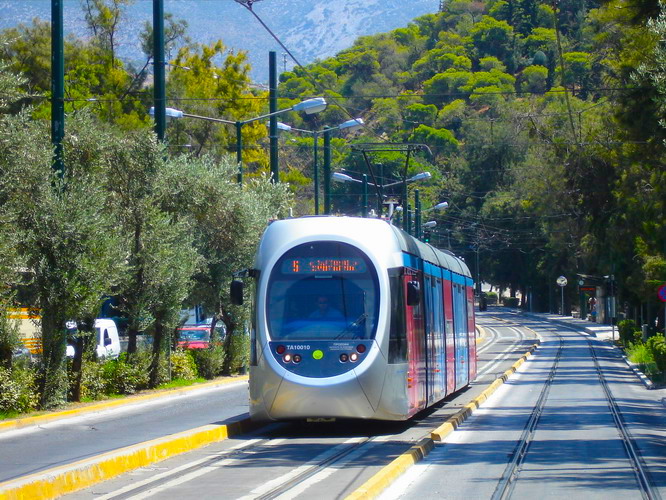
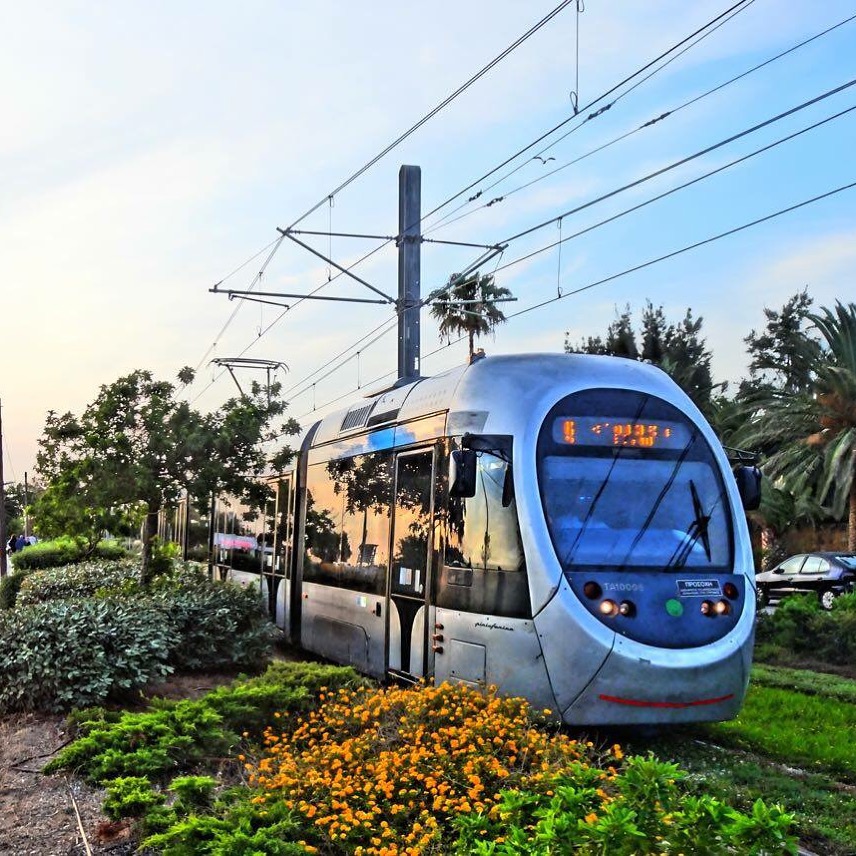
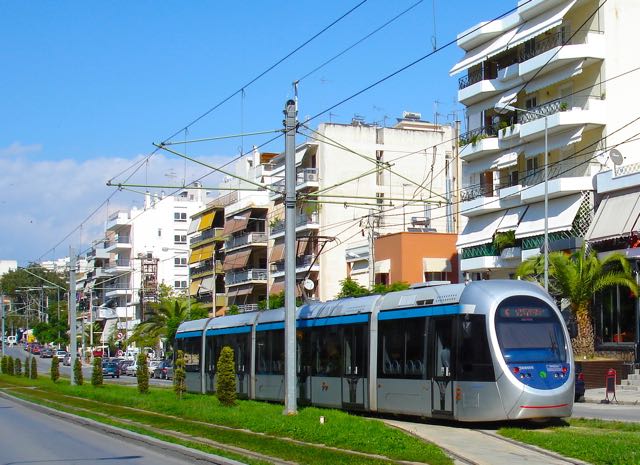
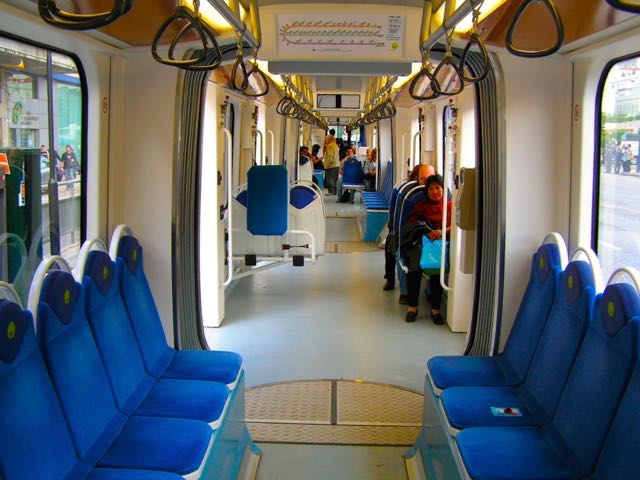
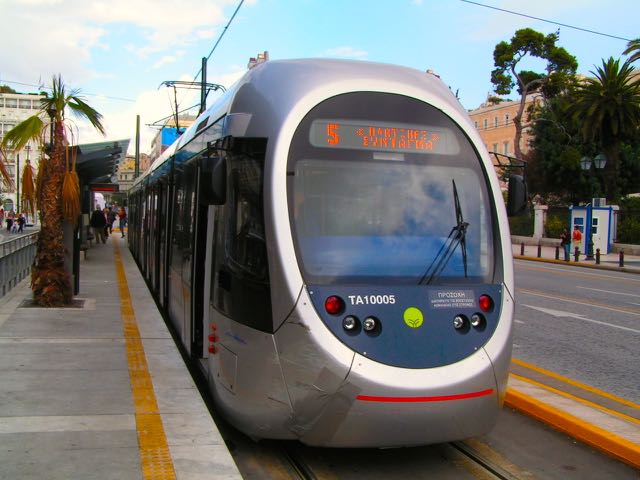 Another piece of the puzzle that has make Athens more fun and easy to live in began service on July 19th of 2004; the coastal tram. These high-tech streetcars run on tracks that begin in Syntagma and end up in Voula. The cars are air-conditioned and comfortable
and though a little slow, (the trip to Glyfada takes about an hour), are enjoyable and offer some great views of the coast. A ticket for the 26 kilometer route costs about a euro and a half and must be bought from a kiosk or at
special stands in main squares and at the stations and stops. They can be used for 90 minutes so in other words if you want to connect with a bus or the metro you have 90 minutes from the time your ticket is first stamped when any public transportation is covered in the price of that ticket. People under 18 travel for half price and the disabled travel for free. See the new information on tickets
and bus passes Another piece of the puzzle that has make Athens more fun and easy to live in began service on July 19th of 2004; the coastal tram. These high-tech streetcars run on tracks that begin in Syntagma and end up in Voula. The cars are air-conditioned and comfortable
and though a little slow, (the trip to Glyfada takes about an hour), are enjoyable and offer some great views of the coast. A ticket for the 26 kilometer route costs about a euro and a half and must be bought from a kiosk or at
special stands in main squares and at the stations and stops. They can be used for 90 minutes so in other words if you want to connect with a bus or the metro you have 90 minutes from the time your ticket is first stamped when any public transportation is covered in the price of that ticket. People under 18 travel for half price and the disabled travel for free. See the new information on tickets
and bus passes
|
|
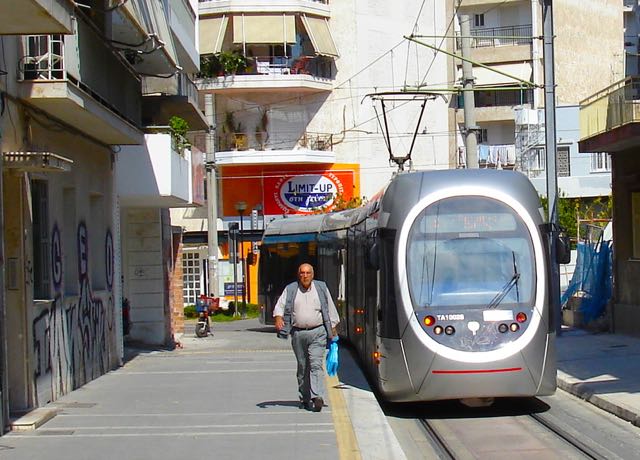 The tram is worth a trip because it
goes through neighborhoods that travelers don't normally visit, like
Neos Kosmos and Nea Smyrni where you can still see remnants
of the refugee settlements of the twenties or go to restaurants, cafes and bars that few tourists ever visit. Nea Smyrni's square is the largest in the Balkans. You can go as far as
Voula or stop along the way at the yacht marina of Alimos or the
beaches on the coast. If you get off at the stop called EDEM you
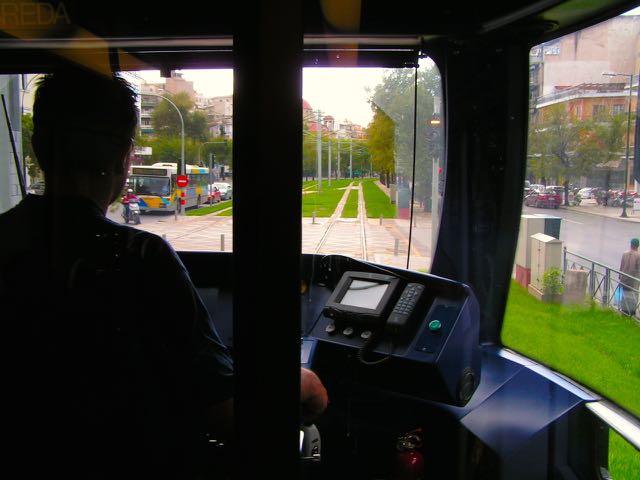
can have lunch at the seaside taverna of the same name, right on the sea. Also the leg which terminates currently at SEF (Peace and Friendship Stadium) leaves one with a short walk along the very pretty canal (or through a park) to the seafood restaurants of Mikrolimano. If possible go to the first car and look out the front window for a great view of the city. You can catch the tram at the top of Syntagma Square on Amalias Avenue just across from
the National Gardens and the Parliament Building. It also makes it really easy to get into Athens to see the sights if you are staying in the coastal suburbs of Faliron, Glyfada, and Voula. You can also take the metro to Faliron and catch the tram there where it follows the coast all the way
to Voula and in the opposite direction all the way to Pireaus and the ferry boats, close to the metro and the suburban rail station. The tram is worth a trip because it
goes through neighborhoods that travelers don't normally visit, like
Neos Kosmos and Nea Smyrni where you can still see remnants
of the refugee settlements of the twenties or go to restaurants, cafes and bars that few tourists ever visit. Nea Smyrni's square is the largest in the Balkans. You can go as far as
Voula or stop along the way at the yacht marina of Alimos or the
beaches on the coast. If you get off at the stop called EDEM you
can have lunch at the seaside taverna of the same name, right on the sea. Also the leg which terminates currently at SEF (Peace and Friendship Stadium) leaves one with a short walk along the very pretty canal (or through a park) to the seafood restaurants of Mikrolimano. If possible go to the first car and look out the front window for a great view of the city. You can catch the tram at the top of Syntagma Square on Amalias Avenue just across from
the National Gardens and the Parliament Building. It also makes it really easy to get into Athens to see the sights if you are staying in the coastal suburbs of Faliron, Glyfada, and Voula. You can also take the metro to Faliron and catch the tram there where it follows the coast all the way
to Voula and in the opposite direction all the way to Pireaus and the ferry boats, close to the metro and the suburban rail station.
|
|
|
|
|
|
|
|
|
|
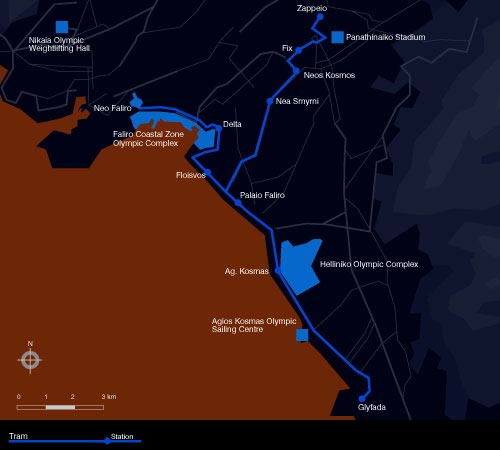
Yes this is the world's most useless map. But I have another one: Metro and Coastal Tram Map
|
|
See Also: Practical Athens Info, Athens Metro, Bus Schedules, Airport Info, George the Famous Taxi Driver, Athens Coastal Suburbs, Athens Beaches, Syntagma Square, Information on tickets and bus passes
|
|
|
Help Support Matt's Greece Guides
Do you enjoy using my site? Have you found it entertaining as well as useful? If so please show your appreciation by booking hotels through the travel agencies and the links found on my Hotels of Greece site. The small commission I make on the bookings enable me to keep working and in most cases you won't find them any cheaper by searching elsewhere. You can find
hotels in Greece by location, price, whether or not it has a swimming pool, and see photos and reviews by using this link to booking.com which also contributes to my website when you book. If you are appreciative of all the free information you get on my websites you can also send
a donation through Paypal or Venmo
Join Matt Barrett's Greece Travel Guides Group on Facebook for comments, photos and other fun stuff. If you enjoy this website please share it with your friends on Facebook and other social media.
|