|
Hi. You have reached an old page of Matt's Guide. The new updated page is here
My favorite neighborhood in Athens, in the shadow of the Acropolis, the Plaka is like a village within the city, an island for those who don't have the time to visit the Greek Islands.
|
|
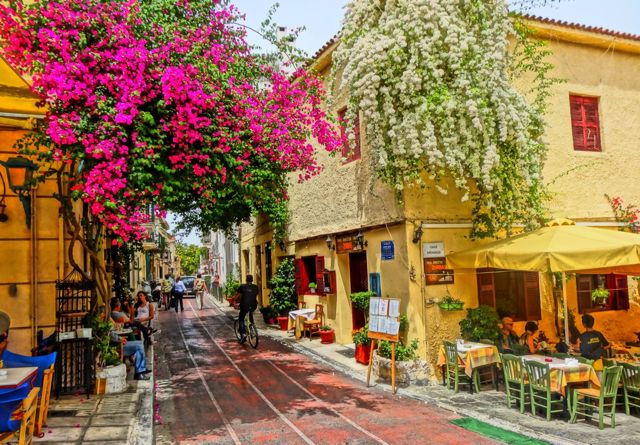 The Plaka is the oldest section of Athens. Most of
the streets have been closed to automobile
traffic, though you should still keep a watchful
eye for a speeding motorcycle or delivery truck.
At one time it was the nightclub district, but
most of these closed down when the government
outlawed amplified music in the neighborhood in the
seventies in an effort to get rid of undesirables.
The strategy was very successful and it is now an
area of restaurants, Jewelry
stores tourist shops, and cafes.
Though it is quite commercialized it is still a
neighborhood and arguably the nicest neighborhood
in central Athens. Most of the restaurants are
typical tourist places but the quality of food is
not bad in some of them and if you follow my leads in
the restaurant
section
of
this guide you should have a few enjoyable
evenings and not be unpleasantly surprised by the
bill or wake up with a gastro-intestinal disorder on the day you were supposed to visit the Acropolis.
The Plaka is the oldest section of Athens. Most of
the streets have been closed to automobile
traffic, though you should still keep a watchful
eye for a speeding motorcycle or delivery truck.
At one time it was the nightclub district, but
most of these closed down when the government
outlawed amplified music in the neighborhood in the
seventies in an effort to get rid of undesirables.
The strategy was very successful and it is now an
area of restaurants, Jewelry
stores tourist shops, and cafes.
Though it is quite commercialized it is still a
neighborhood and arguably the nicest neighborhood
in central Athens. Most of the restaurants are
typical tourist places but the quality of food is
not bad in some of them and if you follow my leads in
the restaurant
section
of
this guide you should have a few enjoyable
evenings and not be unpleasantly surprised by the
bill or wake up with a gastro-intestinal disorder on the day you were supposed to visit the Acropolis.
This page has been updated and moved. Click here to see the updated Plaka Guide
|
|
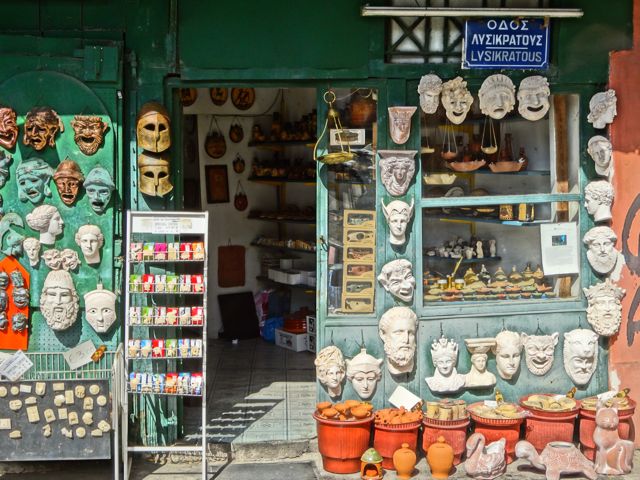 As for the tourist shops they are crammed full of
stuff, some of it junk but plenty of interesting
items if you feel compelled to bring back gifts to
everyone you know. Most of the shops have pretty
much the same stuff for pretty much the same
prices but there are some that are more eclectic
than others that sell antiques, or actual hand painted
icons, wood carvings and paintings.If you wander around the Plaka you will find
lots of different types of shops and even the regular tourist
shops have amazing postcards that you can send
home and make all your friends jealous. Personally
I like the copies of old taverna and cafe menus
and signs which seem to be pretty popular these
days. There are lots of jewelry stores. Most of
them buy from factories and have the same stuff
for about the same price. But there are a couple
that are artist-owned which have hand-made
original pieces and also copies of ancient museum
pieces. Gold jewelry in Greece is inexpensive, not
because the price of Gold is any cheaper but
because labor is. But generally the pieces that
are hand-made by the artists will have more value
then the mass produced pieces of the same weight.
Of these artist-owned shops we
like Byzantino
Jewelery
store.
There are a few galleries
and
there are several museums in the Plaka of special
note the Children's Museum, the Music Museum, the
Greek Folk Art Museum and the Jewish Museum which
is right at the entrance to the Plaka at Nikis and
Kydatheneon streets.
See Museums. As for the tourist shops they are crammed full of
stuff, some of it junk but plenty of interesting
items if you feel compelled to bring back gifts to
everyone you know. Most of the shops have pretty
much the same stuff for pretty much the same
prices but there are some that are more eclectic
than others that sell antiques, or actual hand painted
icons, wood carvings and paintings.If you wander around the Plaka you will find
lots of different types of shops and even the regular tourist
shops have amazing postcards that you can send
home and make all your friends jealous. Personally
I like the copies of old taverna and cafe menus
and signs which seem to be pretty popular these
days. There are lots of jewelry stores. Most of
them buy from factories and have the same stuff
for about the same price. But there are a couple
that are artist-owned which have hand-made
original pieces and also copies of ancient museum
pieces. Gold jewelry in Greece is inexpensive, not
because the price of Gold is any cheaper but
because labor is. But generally the pieces that
are hand-made by the artists will have more value
then the mass produced pieces of the same weight.
Of these artist-owned shops we
like Byzantino
Jewelery
store.
There are a few galleries
and
there are several museums in the Plaka of special
note the Children's Museum, the Music Museum, the
Greek Folk Art Museum and the Jewish Museum which
is right at the entrance to the Plaka at Nikis and
Kydatheneon streets.
See Museums.
|
Finding the Plaka
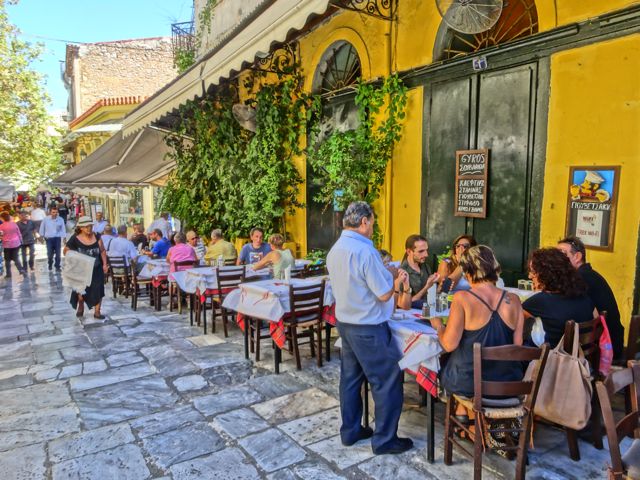 First of all you need to get your bearings. The
Plaka is under the Acropolis and stretches almost to Syntagma. There are two main pedestrian
streets which intersect at what is generally considered the center of the Plaka: Kydathineon and Adrianou. Kydathineon
begins at Nikis st, which is one block down from
Constitution (or Syntagma) Square. If you have
your back to the square walk down the large
pedestrian shopping street of Ermou and take your first
left which is Nikis or your second which is
Voulis. Walk up Nikis till you come to a small
pedestrian street (Kydathineon) and take a right.
If you walk up Voulis it dead-ends at
Kydathineon. First of all you need to get your bearings. The
Plaka is under the Acropolis and stretches almost to Syntagma. There are two main pedestrian
streets which intersect at what is generally considered the center of the Plaka: Kydathineon and Adrianou. Kydathineon
begins at Nikis st, which is one block down from
Constitution (or Syntagma) Square. If you have
your back to the square walk down the large
pedestrian shopping street of Ermou and take your first
left which is Nikis or your second which is
Voulis. Walk up Nikis till you come to a small
pedestrian street (Kydathineon) and take a right.
If you walk up Voulis it dead-ends at
Kydathineon.
Adrianou begins in the Monastiraki flea market but
disappears in the Roman Agora at the archaeological site of Hadrian's Library, before reappearing
behind the wall of the ibrary and Plaka
Square. If you are coming from Omonia Square or
the Attalos or Cecil Hotels, walk up Athinas
street towards Monastiraki. When you get to the
square, take a left on Metropolis Street or on
tiny Pondrossou street beyond. Take a right on
Aeolis and when you come to a small square crowded
with tables and the giant ancient Roman remains of
the wall of Hadrian's Library take a left on
Adrianou and you are in the Plaka. Adrianou and
Kydatheneon connect about a quarter of a mile up.
Once you know these two streets you can wander
around and always find your way back
(hopefully.
|
Kydathineon Street
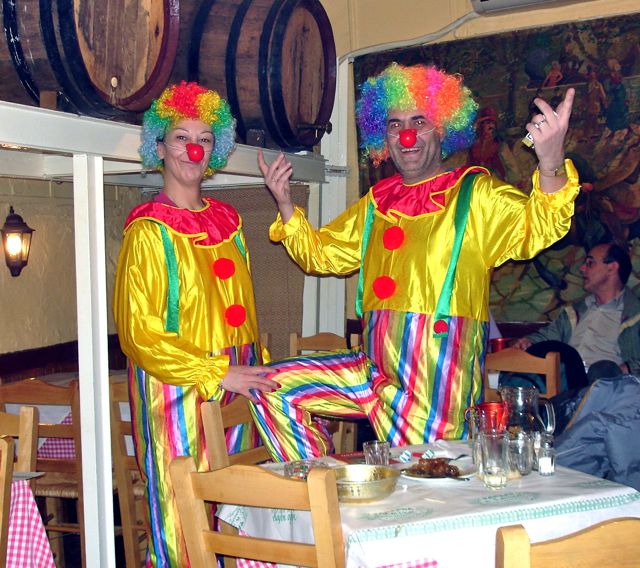 If you are coming from Syntagma you will walk up Nikis street until you come to the pedestrian street Kydatheneon which is right across the street from the Jewish Museum. As you continue past a small Byzantine church on your right and
the
Folk-Art
Museum
on
your left (worth a visit), you will come to the Saita Taverna, one of the last of the basement restaurants that serves bakalairo (fried codfish) as well as grilled meats and a variety of cooked dishes and salads and excellent wine from the barrel. Run by Giorgos and his wife, who come from the Peloponessos, this taverna will give you a somewhat authentic Greek neighborhood taverna experience, especially in the off-season when the action is indoors. When I originally wrote this page Saita was only
open in the winter but since around 2012 they have put tables
outside in the shade of the old Byzantine Church and this is one of the better restaurants in the Plaka so put it on your list of places to eat. If you happen to be in Athens during Apokreas, which is the carnival that precedes lent, this is a good place to come to and more like a party than a quiet place to have a meal. If you are coming from Syntagma you will walk up Nikis street until you come to the pedestrian street Kydatheneon which is right across the street from the Jewish Museum. As you continue past a small Byzantine church on your right and
the
Folk-Art
Museum
on
your left (worth a visit), you will come to the Saita Taverna, one of the last of the basement restaurants that serves bakalairo (fried codfish) as well as grilled meats and a variety of cooked dishes and salads and excellent wine from the barrel. Run by Giorgos and his wife, who come from the Peloponessos, this taverna will give you a somewhat authentic Greek neighborhood taverna experience, especially in the off-season when the action is indoors. When I originally wrote this page Saita was only
open in the winter but since around 2012 they have put tables
outside in the shade of the old Byzantine Church and this is one of the better restaurants in the Plaka so put it on your list of places to eat. If you happen to be in Athens during Apokreas, which is the carnival that precedes lent, this is a good place to come to and more like a party than a quiet place to have a meal.
If you are interested in art don't miss
the Frissiras Museum of Contemporary Greek and
European
Painting at 3 & 7,
Monis Asteriou str. (tel. no. 210 3234678,
3316027). The Frissiras Museum is the only museum
of its kind in Greece. It houses a private
collection of contemporary paintings and drawings
as well as temporary exhibitions of Greek and
European artists, in two fully renovated
neoclassical buildings of the 19th
century.
It is right around the corner from Saita.
|
|
 Another good place to eat in the Plaka, probably the best, is on the corner of Voulis and Nikodimos Streets, right underneath the Electra
Palace Hotel. Unlike some of
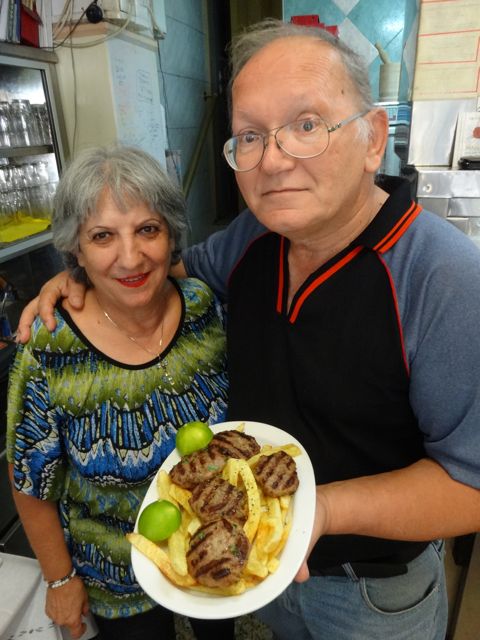
the tree-shaded tourist restaurants in the prime locations on the pedestrian streets of the Plaka, the Paradosiako Cafeneon is in a shop, with a few tables out front, on a busy corner next to a parking lot. Hardly a romantic setting, but it has the best food in the neighborhood which is why many of the Greeks who work around Syntagma eat here. It is owned by Dimitri and his wife Eugenia(photo) and they serve good home-style Greek cooking like you would find in someone's home, or more specifically the home
of
someone who really knows how to cook. Dimitri is the kind of restaurant owner you will find early in the morning at the market on Athinas street, choosing the best meat or fish. Because unlike most of the tourist restaurants in the Plaka where the customer base comes and goes on a daily basis, most of them never to return, Paradosiako is a restaurant that relies on locals eating there year round. So if you are hungry and want good food come here. If you want atmosphere and to people watch there are plenty of
other choices in the center of the Plaka. It is also a good place to come for ouzo and meze during the off hours between lunch and dinner. Another good place to eat in the Plaka, probably the best, is on the corner of Voulis and Nikodimos Streets, right underneath the Electra
Palace Hotel. Unlike some of
the tree-shaded tourist restaurants in the prime locations on the pedestrian streets of the Plaka, the Paradosiako Cafeneon is in a shop, with a few tables out front, on a busy corner next to a parking lot. Hardly a romantic setting, but it has the best food in the neighborhood which is why many of the Greeks who work around Syntagma eat here. It is owned by Dimitri and his wife Eugenia(photo) and they serve good home-style Greek cooking like you would find in someone's home, or more specifically the home
of
someone who really knows how to cook. Dimitri is the kind of restaurant owner you will find early in the morning at the market on Athinas street, choosing the best meat or fish. Because unlike most of the tourist restaurants in the Plaka where the customer base comes and goes on a daily basis, most of them never to return, Paradosiako is a restaurant that relies on locals eating there year round. So if you are hungry and want good food come here. If you want atmosphere and to people watch there are plenty of
other choices in the center of the Plaka. It is also a good place to come for ouzo and meze during the off hours between lunch and dinner.
|
|
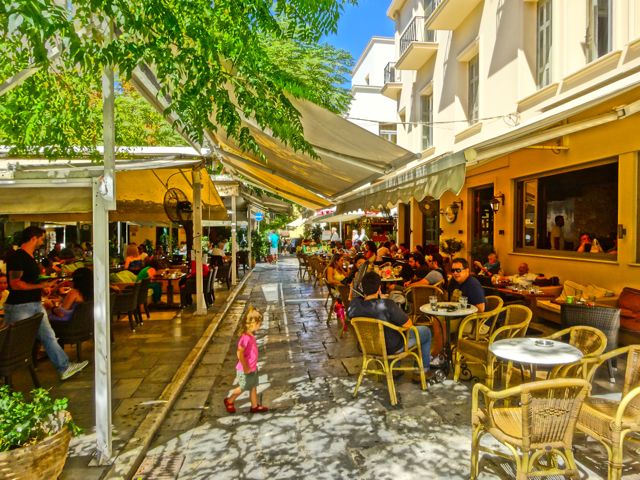 If you are on Kydathineon Street coming from Nikos, you will come to a small square surrounded by cafes and restaurants called Platia Filomenon Eterias, though nobody calls it that. They just call it the Platia. If you are here for Easter the Epitaphios of three neighborhood churches collide in this small square, but most days and nights it is a nice
quiet place to have a meal, a drink or people watch. The
Oionos
Cafe
is a nice place to hang out for a soda or a beer. It is on the small Square (which is actually
the main square of the Plaka) near the Byzantino
restaurant and the Cine Paris. Take a left on
Geronda street. Great coffee, shady in the summer
and in the winter there is a nice warm fireplace
inside. If you are coming from the other direction
up Adrianou you take a left on Kydatheneon street
and then a right after the square. They make great
coffee here. In fact all the cafes around the
square are pretty good and nice places to pass the
time anytime of day and no matter what the season
is.
If you order ouzo you may ask for a
'mee-cree
pee-kee-lee-ah',
which means a small snack (or assortment). If you
don't ask for anything you will probably get a
bowl of peanuts which is OK too. The whole art of
drinking ouzo and living to tell about it is the
eating
of
mezedes,
snacks that keep body and mind relatively stable
while drinking. You will very rarely see a Greek
obnoxiously drunk. Drinking in Greece is a from of
communication. I don't want to endorse the
consumption of alcohol as a remedy for anything
but when done in moderation there seems to be
almost a spiritual dimension to it. For me anyway.
By the way if you continue down Geronda street you will come to one of the rare laundromats in Athens. If you are on Kydathineon Street coming from Nikos, you will come to a small square surrounded by cafes and restaurants called Platia Filomenon Eterias, though nobody calls it that. They just call it the Platia. If you are here for Easter the Epitaphios of three neighborhood churches collide in this small square, but most days and nights it is a nice
quiet place to have a meal, a drink or people watch. The
Oionos
Cafe
is a nice place to hang out for a soda or a beer. It is on the small Square (which is actually
the main square of the Plaka) near the Byzantino
restaurant and the Cine Paris. Take a left on
Geronda street. Great coffee, shady in the summer
and in the winter there is a nice warm fireplace
inside. If you are coming from the other direction
up Adrianou you take a left on Kydatheneon street
and then a right after the square. They make great
coffee here. In fact all the cafes around the
square are pretty good and nice places to pass the
time anytime of day and no matter what the season
is.
If you order ouzo you may ask for a
'mee-cree
pee-kee-lee-ah',
which means a small snack (or assortment). If you
don't ask for anything you will probably get a
bowl of peanuts which is OK too. The whole art of
drinking ouzo and living to tell about it is the
eating
of
mezedes,
snacks that keep body and mind relatively stable
while drinking. You will very rarely see a Greek
obnoxiously drunk. Drinking in Greece is a from of
communication. I don't want to endorse the
consumption of alcohol as a remedy for anything
but when done in moderation there seems to be
almost a spiritual dimension to it. For me anyway.
By the way if you continue down Geronda street you will come to one of the rare laundromats in Athens.
|
|
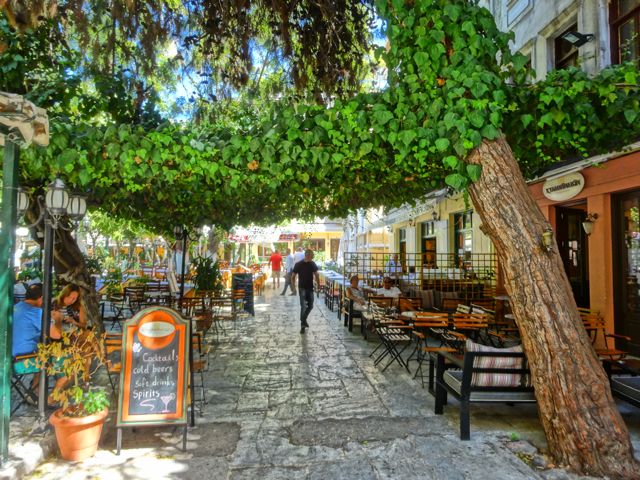 The cafes are generally a little pricey if they
are on the main roads (Kydatheneon, Adrianou) and
around the squares, but in a way worth it for the
view. If you sit in one of these cafes long enough
you will see that everyone who comes to Greece
walks down these two streets. From famous
basketball players to rock stars and nobel prize
winners, these streets below the Acropolis are a
major crossroads of civilization. Some people like
to get right out, walking around and shopping as
soon as they get to Athens. Personally I like to
find a nice quiet outdoor cafe and have an ouzo
and a snack or maybe a coffee so I can relax and
get into my Greek groove.
I usually get an ice coffee
(Frap
peh
) with milk and sugar
(
meh
trio), or a
di
plo es
pres-
so meh
zes
toe
ga
la
ksekorees-ta
. (Memorize this if you love strong espresso).
Then I read a newspaper, or nowdays, being a modern guy, the news on my iphone and watch people for an
hour or two. Or I may actually use my phone to call or sms my
friends to see who is available and
nearby and can come for a coffee. It's one of
those spots where if you sit long enough you will
see everyone you have ever known. Usually after an
island trip I will hang out there and see people
that I saw on the ferries or the beaches. You can see my page of
my favorite
cafes
in
the Plaka and other downtown areas which is also
an entire guide to coffee drinking. The cafes are generally a little pricey if they
are on the main roads (Kydatheneon, Adrianou) and
around the squares, but in a way worth it for the
view. If you sit in one of these cafes long enough
you will see that everyone who comes to Greece
walks down these two streets. From famous
basketball players to rock stars and nobel prize
winners, these streets below the Acropolis are a
major crossroads of civilization. Some people like
to get right out, walking around and shopping as
soon as they get to Athens. Personally I like to
find a nice quiet outdoor cafe and have an ouzo
and a snack or maybe a coffee so I can relax and
get into my Greek groove.
I usually get an ice coffee
(Frap
peh
) with milk and sugar
(
meh
trio), or a
di
plo es
pres-
so meh
zes
toe
ga
la
ksekorees-ta
. (Memorize this if you love strong espresso).
Then I read a newspaper, or nowdays, being a modern guy, the news on my iphone and watch people for an
hour or two. Or I may actually use my phone to call or sms my
friends to see who is available and
nearby and can come for a coffee. It's one of
those spots where if you sit long enough you will
see everyone you have ever known. Usually after an
island trip I will hang out there and see people
that I saw on the ferries or the beaches. You can see my page of
my favorite
cafes
in
the Plaka and other downtown areas which is also
an entire guide to coffee drinking.
|
|
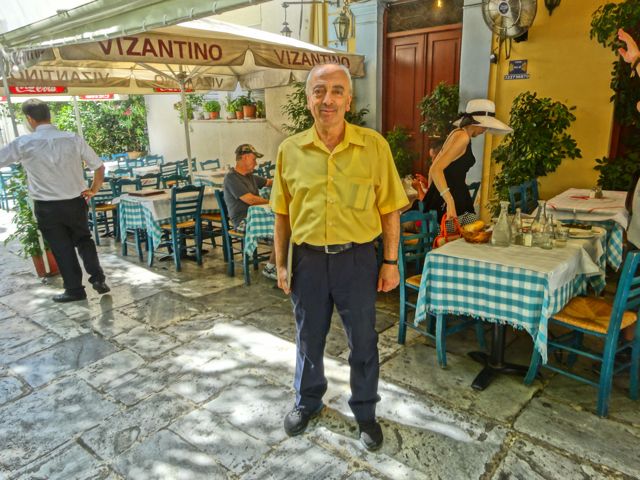 You may notice that there are several restaurants
with tables in the street. In fact it will be
difficult not to notice because every time you
pass one, a waiter or host
tries to pull you over to see the menu. These
restaurants are not bad. Typical fare: mousaka,
pastitsio and souvlaki though they will encourage
you to go for the giant shrimp and lobster because
they cost more. But if you want to know where the
locals eat go to the small park-main square on
Kydatheneon. There is
a kiosk (periptero)
that sells everything from gum and postcards to
English language newspapers. Surrounding the kiosk are tables that belong to
the restaurant across the street. This is
the
Vyzantino
Restaurant.
It used to be called Kostis and many of the locals ate
here. The owner of the building took it over, made
it a little more upscale and though some might
disagree, it's a better restaurant. The locals
would say he spoiled it. It's one of the best in
the tourist part of the Plaka, especially for lunch, and the parade of
people walking by make it an evenings worth of
entertainment. You can sit on the street or under
the trees in the park and this is a good
restaurant to have your first Greek meal in since
it is difficult to go wrong here and all the waiters speak English. In the evening there is more of an emphasis on grilled meats than oven baked food since most of the oven dishes get eaten for lunch. (See
my Restaurant
Guide for
more places to eat in the Plaka and
elsewhere.) You may notice that there are several restaurants
with tables in the street. In fact it will be
difficult not to notice because every time you
pass one, a waiter or host
tries to pull you over to see the menu. These
restaurants are not bad. Typical fare: mousaka,
pastitsio and souvlaki though they will encourage
you to go for the giant shrimp and lobster because
they cost more. But if you want to know where the
locals eat go to the small park-main square on
Kydatheneon. There is
a kiosk (periptero)
that sells everything from gum and postcards to
English language newspapers. Surrounding the kiosk are tables that belong to
the restaurant across the street. This is
the
Vyzantino
Restaurant.
It used to be called Kostis and many of the locals ate
here. The owner of the building took it over, made
it a little more upscale and though some might
disagree, it's a better restaurant. The locals
would say he spoiled it. It's one of the best in
the tourist part of the Plaka, especially for lunch, and the parade of
people walking by make it an evenings worth of
entertainment. You can sit on the street or under
the trees in the park and this is a good
restaurant to have your first Greek meal in since
it is difficult to go wrong here and all the waiters speak English. In the evening there is more of an emphasis on grilled meats than oven baked food since most of the oven dishes get eaten for lunch. (See
my Restaurant
Guide for
more places to eat in the Plaka and
elsewhere.)
|
|
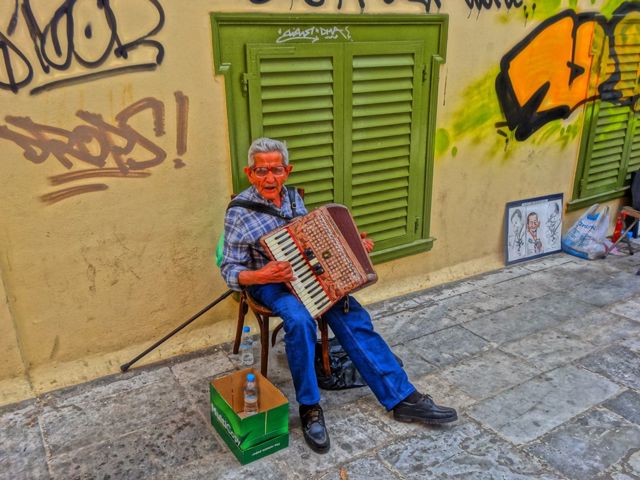 The Plaka is full of street musicians, flower
sellers, photographers and people who sell beads
or will write your name on a grain of rice. My personal favorites are the moldable
faces made out of balloons and the girl who sells
the fuzzy marionettes. All the flower girls know
me and seek me out because after a couple ouzos I
love everyone and believe a woman should
have a flower. Most of the flower girls come
from the area of Xanthi in north-eastern Greece
and are Greek Muslims. The gardenias smell
incredible even when they look a little
ragged.
Of the musicians I like the Albanian folk singer.
My favorite song is his rendition of Stevie
Wonder's 'I Just Called To Say I love You'. Don't
be afraid to request it if he comes to your table
though I have heard he is no longer around, perhaps having been discovered and taken to LA by a big-time record producer. One of
my favorite street musicians is the accordian
player on the corner of Kydatheneon and Voulis. He
plays so beautifully and looks so sad I always
leave him half a euro or so. If you see him why
not do the same? He is usually there in the
daytime. I always keep my change and give it to
the musicians in the street. I rarely leave the
hotel without a pocket full of change jangling and
maybe that is why the flower girls find me so
easily. One thing to keep in mind is that these
people are not bums. Some of them are classically
trained and performed in major symphonies in their
home countries but have been exiled by war,
poverty or other circumstances and now make a
living entertaining in the streets of Athens. If
you listen you will hear a very high level of
musicianship, and giving half a euro for a few
hundred notes is a bargain. They say that one of
the kids who sang opera with his father on Ermou
was discovered and sent to a well known music
conservatory. There are a few Russian and
Hungarian violin players wandering around who will
astound you.
Of course there are those who play terribly and just come to bother you so you give them money to go away. How you handle them is up to you. The Plaka is full of street musicians, flower
sellers, photographers and people who sell beads
or will write your name on a grain of rice. My personal favorites are the moldable
faces made out of balloons and the girl who sells
the fuzzy marionettes. All the flower girls know
me and seek me out because after a couple ouzos I
love everyone and believe a woman should
have a flower. Most of the flower girls come
from the area of Xanthi in north-eastern Greece
and are Greek Muslims. The gardenias smell
incredible even when they look a little
ragged.
Of the musicians I like the Albanian folk singer.
My favorite song is his rendition of Stevie
Wonder's 'I Just Called To Say I love You'. Don't
be afraid to request it if he comes to your table
though I have heard he is no longer around, perhaps having been discovered and taken to LA by a big-time record producer. One of
my favorite street musicians is the accordian
player on the corner of Kydatheneon and Voulis. He
plays so beautifully and looks so sad I always
leave him half a euro or so. If you see him why
not do the same? He is usually there in the
daytime. I always keep my change and give it to
the musicians in the street. I rarely leave the
hotel without a pocket full of change jangling and
maybe that is why the flower girls find me so
easily. One thing to keep in mind is that these
people are not bums. Some of them are classically
trained and performed in major symphonies in their
home countries but have been exiled by war,
poverty or other circumstances and now make a
living entertaining in the streets of Athens. If
you listen you will hear a very high level of
musicianship, and giving half a euro for a few
hundred notes is a bargain. They say that one of
the kids who sang opera with his father on Ermou
was discovered and sent to a well known music
conservatory. There are a few Russian and
Hungarian violin players wandering around who will
astound you.
Of course there are those who play terribly and just come to bother you so you give them money to go away. How you handle them is up to you.
|
|
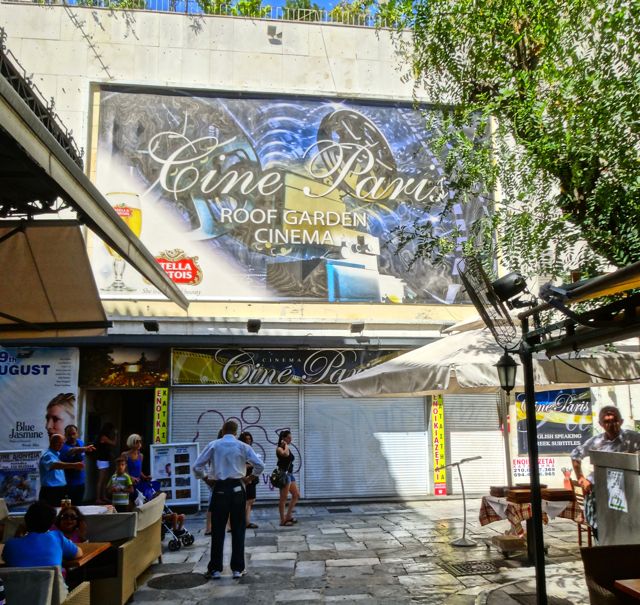 The Cine
Paris,
the best outdoor movie theater in Athens. Of
course you haven't come to Greece to go to the
movies but if you are not ready for a wild night
out and just want to sit back and be entertained,
you are in for a treat. Almost all the movies are
in English with Greek subtitles and when you go
inside you will discover that the theater is on
the roof with a view of the Acropolis. Some nights
you can see the colors change during the sound and
light show. There is a bar and you can have a
brandy and watch your favorite stars in the shadow
of the Parthenon. This is also one of the best
places to buy totally unique gifts because out
front they sell the Greek versions of movie
posters. You can find anything from the most
popular contemporary films to posters from the
sixties. Even if you don't buy you can spend an
hour browsing through them all and in the end you
will probably find something you have to
have. The Cine
Paris,
the best outdoor movie theater in Athens. Of
course you haven't come to Greece to go to the
movies but if you are not ready for a wild night
out and just want to sit back and be entertained,
you are in for a treat. Almost all the movies are
in English with Greek subtitles and when you go
inside you will discover that the theater is on
the roof with a view of the Acropolis. Some nights
you can see the colors change during the sound and
light show. There is a bar and you can have a
brandy and watch your favorite stars in the shadow
of the Parthenon. This is also one of the best
places to buy totally unique gifts because out
front they sell the Greek versions of movie
posters. You can find anything from the most
popular contemporary films to posters from the
sixties. Even if you don't buy you can spend an
hour browsing through them all and in the end you
will probably find something you have to
have.
|
|
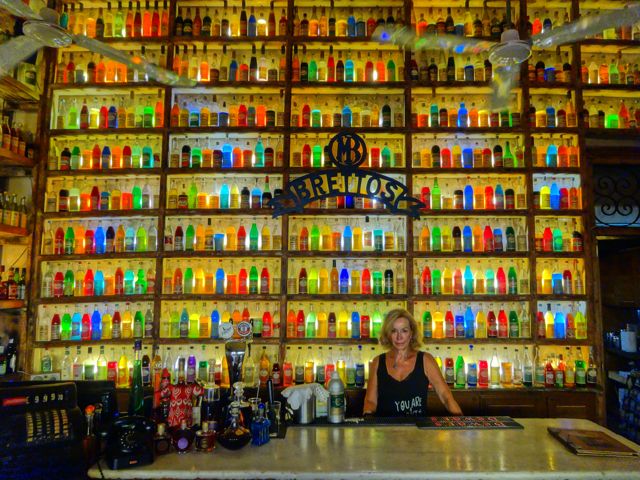 As you continue down Kydatheneon street you will
pass a gold shop, a tourist shop and a
gelato-ice-cream store. Then on your left, above
Domigos Bakaliarzidiko (a bakalaro restaurant only open in the winter) is Brettos Liquor
store. But it is more than a liquor store. It was
the oldest distillery in Athens. Go inside and
admire the old barrels full of spirits and the
colored bottles that line the walls up to the
ceiling. It has a tiny bar where you can get
drinks by the glass. Brettos has been sold but the new owners have tried to keep it as traditional as they can while at the same time making the bar a more comfortable place to hang out, installing air-conditioning for example. It really has become a popular traveler's hangout and I don't even know if they are still making their own ouzo and other alcoholic drinks or if they are buying it and putting their label on it, but if you are looking for a place in Plaka that has a bar where you can meet people this
is not a bad place to stop in. I used to buy their ouzo religiously and bring back several bottles when the original owners had the shop. Then when it got sold I tried it and did not like it that much and began buying from Angelo the Ouzo King down the street. But the last time I went in I met the owners, Pavlos and Despina and sampled their double and triple distilled ouzo and gave it very high marks. As you continue down Kydatheneon street you will
pass a gold shop, a tourist shop and a
gelato-ice-cream store. Then on your left, above
Domigos Bakaliarzidiko (a bakalaro restaurant only open in the winter) is Brettos Liquor
store. But it is more than a liquor store. It was
the oldest distillery in Athens. Go inside and
admire the old barrels full of spirits and the
colored bottles that line the walls up to the
ceiling. It has a tiny bar where you can get
drinks by the glass. Brettos has been sold but the new owners have tried to keep it as traditional as they can while at the same time making the bar a more comfortable place to hang out, installing air-conditioning for example. It really has become a popular traveler's hangout and I don't even know if they are still making their own ouzo and other alcoholic drinks or if they are buying it and putting their label on it, but if you are looking for a place in Plaka that has a bar where you can meet people this
is not a bad place to stop in. I used to buy their ouzo religiously and bring back several bottles when the original owners had the shop. Then when it got sold I tried it and did not like it that much and began buying from Angelo the Ouzo King down the street. But the last time I went in I met the owners, Pavlos and Despina and sampled their double and triple distilled ouzo and gave it very high marks.
|
Adrianou Street
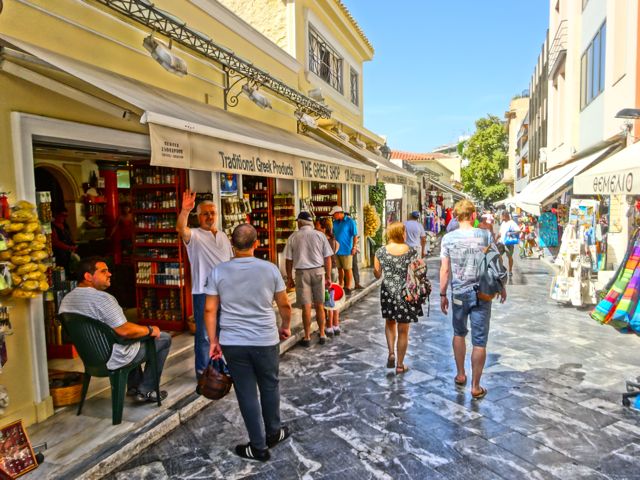 Just Beyond Brettos Kydatheneon meets Adrianou street,
which is the other main street in the Plaka named after the Emperor Hadrian. If you like to shop and stroll, make a right on
Adrianou. Tourist shop after jewelry store after
T-shirt store and then repeated again and again.
Everybody who comes to Greece walks up this street
and buys postcards, worry beads (komboloi),
ashtrays, icons, you name it. There are also
street venders selling nuts and refugees from what
was once Yugoslavia and the Soviet Union selling
the strange toys made from flour and balloons or
offering to write your name on a grain of rice for
a few euro. If you are still shopping for Olympic paraphernalia you have a lot to choose from. I don't think there is anything the Athens Olympic Committee didn't license and put their little official stamp on and these are sold in shops on Adriannou like the one at #107 on the corner where Hill and Kekropos and
Hatzimichali streets all meet at the George Dolkas T-Shirt Shop. If you don't plan to go to the next Olympics this may be your best bet at getting those last Olympic Pins that people fanatically collect and trade. He may have a few left. You can see the non-Olympic items sold at the George Dolkas T-shirt Shop by clicking
here. He has some of the more tasteful shirts in the Plaka. Some of the t-shirts on display in the Plaka make you wonder who on earth would buy them. Many of them are a combination of bad design, bad taste and extreme sexisim. But George seems to have some integrity with the shirts he sells. There is a Swatch
Shop next door which I know well. Not that I have owned a watch since I left mine hanging on a tree in the rain when I was 12
years old, but my daughter feels
like she has to have a new one every year and can spend hours in the store. If you walk up Kekropis Street which is right next to the T-shirt Shop and look on your left you will find the small workshop of Dimitris Koutelieris who makes furniture and art out of dismantled ships, houses and other recycled material. Though most items like tables, chairs, dressers etc are so big that they will have to be shipped back there are a few smaller pieces that you can carry back with you. Even if you are not buying
it's a neat place to visit. Its at #14. Just Beyond Brettos Kydatheneon meets Adrianou street,
which is the other main street in the Plaka named after the Emperor Hadrian. If you like to shop and stroll, make a right on
Adrianou. Tourist shop after jewelry store after
T-shirt store and then repeated again and again.
Everybody who comes to Greece walks up this street
and buys postcards, worry beads (komboloi),
ashtrays, icons, you name it. There are also
street venders selling nuts and refugees from what
was once Yugoslavia and the Soviet Union selling
the strange toys made from flour and balloons or
offering to write your name on a grain of rice for
a few euro. If you are still shopping for Olympic paraphernalia you have a lot to choose from. I don't think there is anything the Athens Olympic Committee didn't license and put their little official stamp on and these are sold in shops on Adriannou like the one at #107 on the corner where Hill and Kekropos and
Hatzimichali streets all meet at the George Dolkas T-Shirt Shop. If you don't plan to go to the next Olympics this may be your best bet at getting those last Olympic Pins that people fanatically collect and trade. He may have a few left. You can see the non-Olympic items sold at the George Dolkas T-shirt Shop by clicking
here. He has some of the more tasteful shirts in the Plaka. Some of the t-shirts on display in the Plaka make you wonder who on earth would buy them. Many of them are a combination of bad design, bad taste and extreme sexisim. But George seems to have some integrity with the shirts he sells. There is a Swatch
Shop next door which I know well. Not that I have owned a watch since I left mine hanging on a tree in the rain when I was 12
years old, but my daughter feels
like she has to have a new one every year and can spend hours in the store. If you walk up Kekropis Street which is right next to the T-shirt Shop and look on your left you will find the small workshop of Dimitris Koutelieris who makes furniture and art out of dismantled ships, houses and other recycled material. Though most items like tables, chairs, dressers etc are so big that they will have to be shipped back there are a few smaller pieces that you can carry back with you. Even if you are not buying
it's a neat place to visit. Its at #14.
|
|
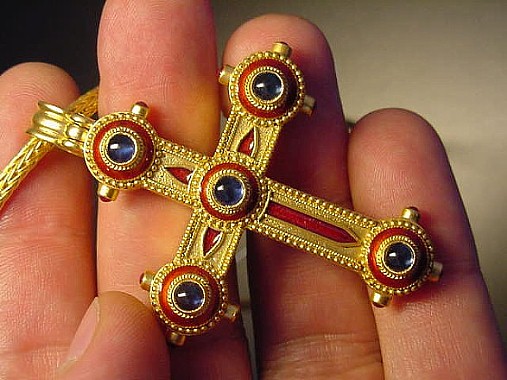 The Byzantino
Jewelery
Store is
on your left at 120 next to the ice-cream shop.
This is where my wife buys her jewelery from
because the prices are so low and the work is so
good. (My wife is a goldsmith). They work
primarily with 22K gold in a variety of styles, of
which my favorites are those that are based on the
ancient Greek designs or exact copies. This is one
of the few jewelry stores that is
artist-owned. In
other words they make their own pieces rather than
buy from a factory. If you are looking for
something beautiful that will gain value then shop
here.
Prices of their jewelry vary from a few euros to a few thousand but you won't find better quality in the Plaka or the islands. People ask me what is the best gift to bring back from Greece and I would have to say gold. Even in these hard economic times, maybe especially now. Watch the price of gold as it continuously goes up and you will realize what makes it the gift that keeps on giving. Say you buy a piece of 22k gold jewelry, maybe a copy of an ancient Greek or Byzantine piece. Lets say it has 2 ounces
of gold and the price of gold on the market is $100 an ounce. The piece cost maybe $300. So it has $200 worth of gold and $100 in labor and overhead. As the price of gold rises so does the value of your jewelry to the point where in the not too distant future the value of your piece, just by weight of the gold will be more than what you paid for the entire piece, gold, labor, overhead and all. Of course most people buy jewelry for sentimental reasons or because they appreciate the beauty of it. But in this case
it is practical because if the economy collapses you have gold! So you are not just buying something
beautiful, you are making an investment in a limited commodity that should gain
value. If the value of the dollar is dropping and the price of gold is going up,
what would you rather have more of: dollars or gold? (Ladies, use this rationalization on your
husbands if you want to get something nice because it worked on me. I have to
admit it makes sense.) Anyway see Byzantino's website The Byzantino
Jewelery
Store is
on your left at 120 next to the ice-cream shop.
This is where my wife buys her jewelery from
because the prices are so low and the work is so
good. (My wife is a goldsmith). They work
primarily with 22K gold in a variety of styles, of
which my favorites are those that are based on the
ancient Greek designs or exact copies. This is one
of the few jewelry stores that is
artist-owned. In
other words they make their own pieces rather than
buy from a factory. If you are looking for
something beautiful that will gain value then shop
here.
Prices of their jewelry vary from a few euros to a few thousand but you won't find better quality in the Plaka or the islands. People ask me what is the best gift to bring back from Greece and I would have to say gold. Even in these hard economic times, maybe especially now. Watch the price of gold as it continuously goes up and you will realize what makes it the gift that keeps on giving. Say you buy a piece of 22k gold jewelry, maybe a copy of an ancient Greek or Byzantine piece. Lets say it has 2 ounces
of gold and the price of gold on the market is $100 an ounce. The piece cost maybe $300. So it has $200 worth of gold and $100 in labor and overhead. As the price of gold rises so does the value of your jewelry to the point where in the not too distant future the value of your piece, just by weight of the gold will be more than what you paid for the entire piece, gold, labor, overhead and all. Of course most people buy jewelry for sentimental reasons or because they appreciate the beauty of it. But in this case
it is practical because if the economy collapses you have gold! So you are not just buying something
beautiful, you are making an investment in a limited commodity that should gain
value. If the value of the dollar is dropping and the price of gold is going up,
what would you rather have more of: dollars or gold? (Ladies, use this rationalization on your
husbands if you want to get something nice because it worked on me. I have to
admit it makes sense.) Anyway see Byzantino's website
|
|
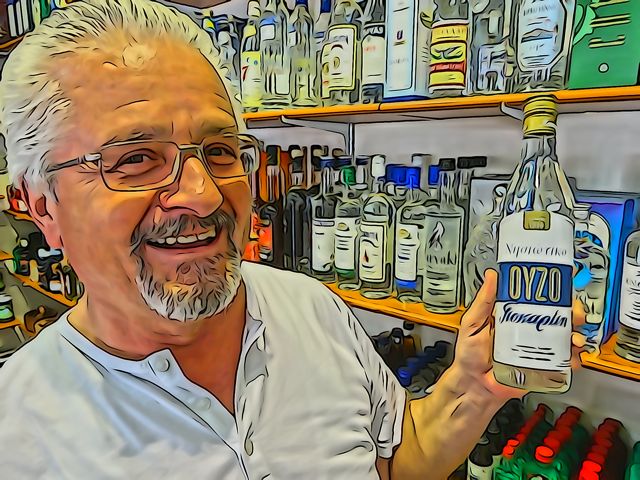 Further down the street is the shop of Angelo the Ouzo King who prides himself on having more varieties of ouzo than any shop in Athens. If you can't afford gold then ouzo is probably the next
best thing for getting through hard economic times. If you want
to know all about Ouzo Angelo is
the guy to talk to and his shop also has traditional products like olive oil, herbs, sweets, wine, soap and
natural products from all over Greece. Angelo is a pretty cool guy and has had a number of tourist businesses in the Plaka over the years and has watched it go through its changes. The ouzo and traditional products is a good direction for him but what I like about Angelo is the way he will pull me off the street and say "Matthew. You must try this newest ouzo I have found. It comes from Serres in Northern Greece and it is fantastic." I always do. He is always right. Sometimes I will recommend an obscure
ouzo I tasted somewhere and often the next time I come into the store there it is. Last time my brother returned from Athens he pulled out a bottle of Baba Tzim, a gift from Angelo. Who says having a website does not have fringe benefits? If you want to know what to buy here is my recommendation: Baba Tzim, Dimino, Samara, Veto, Kefi, Yianatsi, or Pitsiladi (really strong). These are the more obscure brands you won't find in most other shops. The ouzo that we connoisseurs prefer. Apostegmeno means pure distilled. That's what you want. The most tasty is between 40 and 42%. 46 and up will knock your socks off. Ask about raki, tsikoudia and tsipuro too. They are like ouzo without the anise flavor. Further down the street is the shop of Angelo the Ouzo King who prides himself on having more varieties of ouzo than any shop in Athens. If you can't afford gold then ouzo is probably the next
best thing for getting through hard economic times. If you want
to know all about Ouzo Angelo is
the guy to talk to and his shop also has traditional products like olive oil, herbs, sweets, wine, soap and
natural products from all over Greece. Angelo is a pretty cool guy and has had a number of tourist businesses in the Plaka over the years and has watched it go through its changes. The ouzo and traditional products is a good direction for him but what I like about Angelo is the way he will pull me off the street and say "Matthew. You must try this newest ouzo I have found. It comes from Serres in Northern Greece and it is fantastic." I always do. He is always right. Sometimes I will recommend an obscure
ouzo I tasted somewhere and often the next time I come into the store there it is. Last time my brother returned from Athens he pulled out a bottle of Baba Tzim, a gift from Angelo. Who says having a website does not have fringe benefits? If you want to know what to buy here is my recommendation: Baba Tzim, Dimino, Samara, Veto, Kefi, Yianatsi, or Pitsiladi (really strong). These are the more obscure brands you won't find in most other shops. The ouzo that we connoisseurs prefer. Apostegmeno means pure distilled. That's what you want. The most tasty is between 40 and 42%. 46 and up will knock your socks off. Ask about raki, tsikoudia and tsipuro too. They are like ouzo without the anise flavor.
|
|
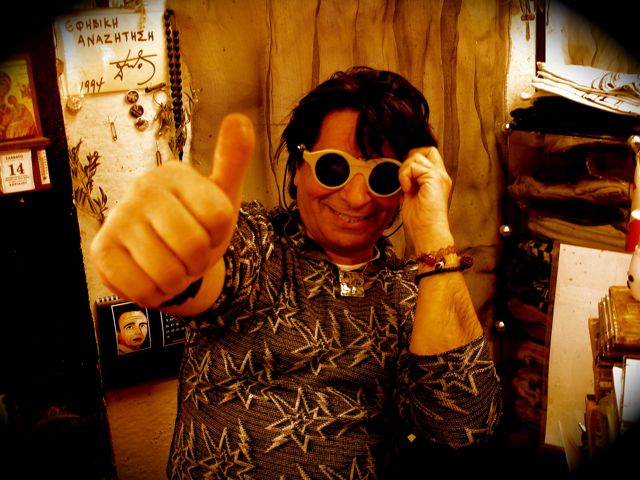 Continue down Adrianou until you come to Remember, the first punk-fashion store in Greece and an institution. Run by designer Dimitris Tsounatos(photo) this boutique has been visited by your favorite rock stars, actors, fashion designers and models and there is a photo
album full of them to
prove
it. If you are looking for unique designs in clothes, jewelry and art, or if you just want to see something different from the tourist
shops that line Adrianou then stop in at #79 Adrianou. You may find your favorite band in an original design or you may find an original design that is so unique you will have to have it like the one I bought that I am not permitted to wear because my wife says it draws attention to me and makes me look like a giant graffiti covered pumpkin. I don't let my wife tell me what I can and can't buy. Unfortunately she won't let me wear it out of the house. I am thinking of just having it framed. Visit Dimitris. He
is a classic Plaka character of a bygone age and punk lives on in his shop. Heavy-metal too. In fact when all the punk and heavy metal bands come to play Athens they head straight for Remember so you may run into one of your heroes. Continue down Adrianou until you come to Remember, the first punk-fashion store in Greece and an institution. Run by designer Dimitris Tsounatos(photo) this boutique has been visited by your favorite rock stars, actors, fashion designers and models and there is a photo
album full of them to
prove
it. If you are looking for unique designs in clothes, jewelry and art, or if you just want to see something different from the tourist
shops that line Adrianou then stop in at #79 Adrianou. You may find your favorite band in an original design or you may find an original design that is so unique you will have to have it like the one I bought that I am not permitted to wear because my wife says it draws attention to me and makes me look like a giant graffiti covered pumpkin. I don't let my wife tell me what I can and can't buy. Unfortunately she won't let me wear it out of the house. I am thinking of just having it framed. Visit Dimitris. He
is a classic Plaka character of a bygone age and punk lives on in his shop. Heavy-metal too. In fact when all the punk and heavy metal bands come to play Athens they head straight for Remember so you may run into one of your heroes.
|
|
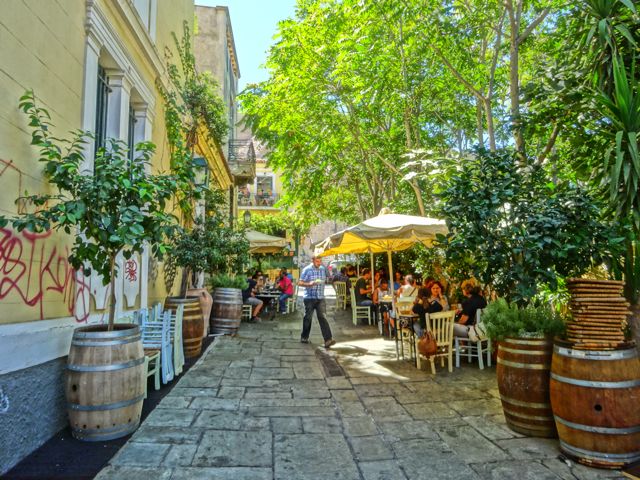 If shopping for T-shirts, jewelry or ouzo does not excite you there
is a quiet alternative. Turn left up Hill Street (or
Chill street, depending on which of the two street
signs you look at) and follow the street as it
becomes Scholiou and then Epiharmou Street. Stop
and look straight ahead and up. It's the walls of
the Acropolis and below it, where Epiharmou
connects with Tripodon is an ouzerie known locally
as Kouklis but the name on the sign is Scholarchion. You will find in Athens that some places are known to the locals by the name of the owner, rather than the actual name.
You will see a building with a packed balcony and
windows. Sit down and have a drink. Their
specialty is flaming sausages and trout but most
people come here to drink the day away. The food
is decent and some travel-writers spend hours here thinking they have stumbled upon the real thing but actually a more authentic place with better food is To Kafeneon just below with its tables slanted so precariously that there is at least one food accident a night. Very
cozy indoors in the winter with a fireplace and a
warming glass of tsipura and their collection of
mezedes from northern Greece. You won't see many tourists but at
least one copy of the menu is in English. When Jamie Oliver did his show about Greek cooking he had a dinner here and invited a few friends (me included). If you watch that episode you will see me in it. If shopping for T-shirts, jewelry or ouzo does not excite you there
is a quiet alternative. Turn left up Hill Street (or
Chill street, depending on which of the two street
signs you look at) and follow the street as it
becomes Scholiou and then Epiharmou Street. Stop
and look straight ahead and up. It's the walls of
the Acropolis and below it, where Epiharmou
connects with Tripodon is an ouzerie known locally
as Kouklis but the name on the sign is Scholarchion. You will find in Athens that some places are known to the locals by the name of the owner, rather than the actual name.
You will see a building with a packed balcony and
windows. Sit down and have a drink. Their
specialty is flaming sausages and trout but most
people come here to drink the day away. The food
is decent and some travel-writers spend hours here thinking they have stumbled upon the real thing but actually a more authentic place with better food is To Kafeneon just below with its tables slanted so precariously that there is at least one food accident a night. Very
cozy indoors in the winter with a fireplace and a
warming glass of tsipura and their collection of
mezedes from northern Greece. You won't see many tourists but at
least one copy of the menu is in English. When Jamie Oliver did his show about Greek cooking he had a dinner here and invited a few friends (me included). If you watch that episode you will see me in it.
|
|
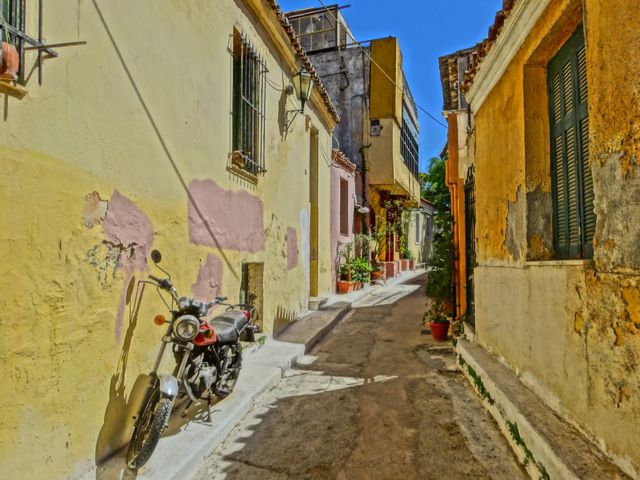 Next door to Kouklis is a fancy ice-cream and milk shop called
Amalfi.
If you have a sweet tooth I encourage you to go
inside. The small church
next to Kouklis is St
Nicholas and
is one of the most popular of the old churches in
Athens and a great place to go if you are in
Athens for midnight mass on Easter Sunday. If you
cross the parking lot and go up the steps and take
a right you will come to another of my favorite
restaurants, Psaras fish
taverna, under new ownership but a nice place for a meal away from the crowds. This part of the Plaka is mainly residential but also archaeological, which means you can buy a house here for a lot of money but if you happen to do renovations or an addition and you discover an ancient wall or even worse, a column from a temple, or a load of pottery, coins or other artifacts, the Archaeological society will stop your work and can hold you up for years. So while buying an old house in the Plaka may seem romantic,
you may be better off renting. Next door to Kouklis is a fancy ice-cream and milk shop called
Amalfi.
If you have a sweet tooth I encourage you to go
inside. The small church
next to Kouklis is St
Nicholas and
is one of the most popular of the old churches in
Athens and a great place to go if you are in
Athens for midnight mass on Easter Sunday. If you
cross the parking lot and go up the steps and take
a right you will come to another of my favorite
restaurants, Psaras fish
taverna, under new ownership but a nice place for a meal away from the crowds. This part of the Plaka is mainly residential but also archaeological, which means you can buy a house here for a lot of money but if you happen to do renovations or an addition and you discover an ancient wall or even worse, a column from a temple, or a load of pottery, coins or other artifacts, the Archaeological society will stop your work and can hold you up for years. So while buying an old house in the Plaka may seem romantic,
you may be better off renting.
|
|
Anafiotika: The Island Village in the Plaka
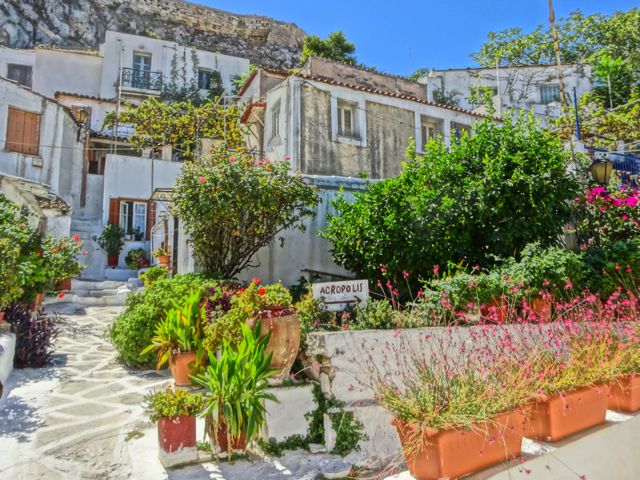 Anafiotika is
the cluster of small houses built on the slopes of
the Acropolis above the Plaka. It's like being on
a Greek Island. It's named Anafiotika because the
original inhabitants were stone masons who came
from the island of Anafi to
build Athens in the mid 19th century. Just
continue up the steps between Kouklis and the
Byzantine church of St Nicholas next to it. You
can wander around the small streets and if you
continue to your right (facing the acropolis) you
can walk along the road that overlooks the city
and leads to the entrance for Greece's most famous
archaeological site and historic landmark, the
Acropolis. Anafiotika is as close as you can get to being on a Greek island in the middle of a big city. If you want to know what it is like to wander around the back streets of Mykonos just come here. The neighborhood is all residential and sadly some of the houses are unoccupied and falling down. Anafiotika is
the cluster of small houses built on the slopes of
the Acropolis above the Plaka. It's like being on
a Greek Island. It's named Anafiotika because the
original inhabitants were stone masons who came
from the island of Anafi to
build Athens in the mid 19th century. Just
continue up the steps between Kouklis and the
Byzantine church of St Nicholas next to it. You
can wander around the small streets and if you
continue to your right (facing the acropolis) you
can walk along the road that overlooks the city
and leads to the entrance for Greece's most famous
archaeological site and historic landmark, the
Acropolis. Anafiotika is as close as you can get to being on a Greek island in the middle of a big city. If you want to know what it is like to wander around the back streets of Mykonos just come here. The neighborhood is all residential and sadly some of the houses are unoccupied and falling down.
|
|
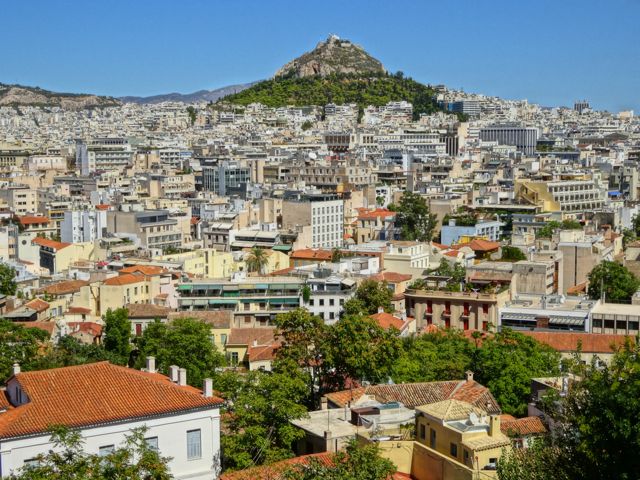 If you come to Anafiotikia and walk to the eastern edge of the Acropolis you will get a nice view of the city. If you turn around and continue walking on the road above the Plaka and go past the Old University of Athens, now a museum, and then past the entrance of the
Acropolis and take a right when you get to the new
pedestrian street Apostolou Pavlou street you will
end up in Thission or
you can continue on and take a right on Ermou and
you are back in Monastiraki. (You can also get to
Monastiraki by cutting through the Agora using the
entrance next to the rock of Areopagos just below
the entrance to the Acropolis.) If you
take a left instead you will be on the same street
but called Dionissou Aeropagitou end up in
Makrianni where you can take a left on Byronos
street and find yourself right back in the heart
of the Plaka again. Byron Street will take you past the
Dirty Corner, a hangout for poets and musicians in
bygone days, right in front of the Monument of
Lissikratous and you can continue walking down Adrianou. But this will take you about an hour. If you come to Anafiotikia and walk to the eastern edge of the Acropolis you will get a nice view of the city. If you turn around and continue walking on the road above the Plaka and go past the Old University of Athens, now a museum, and then past the entrance of the
Acropolis and take a right when you get to the new
pedestrian street Apostolou Pavlou street you will
end up in Thission or
you can continue on and take a right on Ermou and
you are back in Monastiraki. (You can also get to
Monastiraki by cutting through the Agora using the
entrance next to the rock of Areopagos just below
the entrance to the Acropolis.) If you
take a left instead you will be on the same street
but called Dionissou Aeropagitou end up in
Makrianni where you can take a left on Byronos
street and find yourself right back in the heart
of the Plaka again. Byron Street will take you past the
Dirty Corner, a hangout for poets and musicians in
bygone days, right in front of the Monument of
Lissikratous and you can continue walking down Adrianou. But this will take you about an hour.
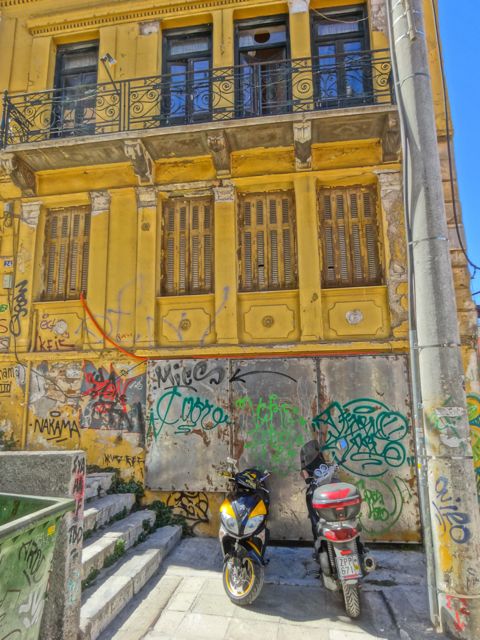 Rather than walk all the way around the Acropolis to get to where you began, you are better off winding your way through the narrow streets of the Plaka until you find the open spaces of the Roman Agora or magically come across Adrianou Street again. If you walk down Panos Street when you get to the bottom of the steps on your left is what was once the
Golden Key and a few feet further on the right in what is now a tourist shop is what was Folk 17. These two counter-culture hangouts were popular during the military dictatorship of 1967-1974. The Golden Key (Kryso Kleidi) was where you could hear the latest underground music, which during the junta was hard to come by. In Folk 17 traveling musicians played live as did some of the Greek folk-rock singers. Since many people did not have money to buy drinks inside, this area was full of young people passing
bottles of wine around, or just hanging out high on whatever drugs they had taken before coming down to the Plaka. In the sixties and early seventies the Plaka was very different from the way it is now. Back then there was music everywhere, from rock to rembetika and laika, and the Plaka was not one of many places to go for nightlife as it is now. It was THE place to go for nightlife, especially during Apokreas(carnival) when people were packed like an ever moving can of sardines through the narrow streets
and up and down the steps in a shower of confetti and a cacophony of horns, whistles and music. Read about Plaka During the Junta Rather than walk all the way around the Acropolis to get to where you began, you are better off winding your way through the narrow streets of the Plaka until you find the open spaces of the Roman Agora or magically come across Adrianou Street again. If you walk down Panos Street when you get to the bottom of the steps on your left is what was once the
Golden Key and a few feet further on the right in what is now a tourist shop is what was Folk 17. These two counter-culture hangouts were popular during the military dictatorship of 1967-1974. The Golden Key (Kryso Kleidi) was where you could hear the latest underground music, which during the junta was hard to come by. In Folk 17 traveling musicians played live as did some of the Greek folk-rock singers. Since many people did not have money to buy drinks inside, this area was full of young people passing
bottles of wine around, or just hanging out high on whatever drugs they had taken before coming down to the Plaka. In the sixties and early seventies the Plaka was very different from the way it is now. Back then there was music everywhere, from rock to rembetika and laika, and the Plaka was not one of many places to go for nightlife as it is now. It was THE place to go for nightlife, especially during Apokreas(carnival) when people were packed like an ever moving can of sardines through the narrow streets
and up and down the steps in a shower of confetti and a cacophony of horns, whistles and music. Read about Plaka During the Junta
If you are on Adrianou walking down towards
Monastiraki you will pass a couple places of
interest including the sponge shops, and a series of
T-shirt shops and boutiques. Halfway down Adrianou
they allow cars but traffic is sparse and
unpleasant for any car that happens to get stuck
among the pedestrians. Adrianou passes the Platia
Plaka and the wall of Hadrian's library and the
Roman Agora where it stops abruptly. But it continues again on the other side of the archaeological site in Monastiraki.
|
|
Archaeology Sites in the Plaka
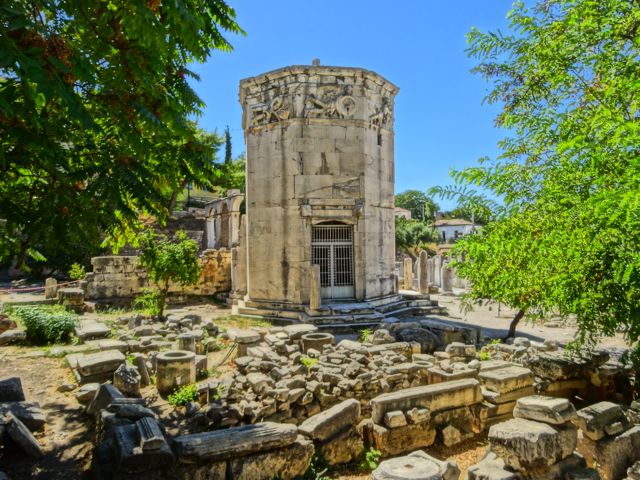 The Plaka is loaded with archaeological sites both
large and small. The famous Tower of the Winds is
just a block up from Adrianou on Aeolou street and
it is a part of the ancient Roman Agora. It was believed by later generations to be a place of great magic and to be the grave of Phillip of Macedon but it was actually a meteorological station from the first century built by the Syrian Astronomer Andronikos Kyrrhestes. It had a hydrolic clock fueled from a reservoir on the south side and inside was a mechanical device that represented the sun, the moon and the five known planets. The frieze which represents the winds and their personalities is the most
interesting part of the building and deserves a closer look. Just across the road is the Museum of Popular Music, one of the best museums in Athens, and the Platanos Taverna, a famous old restaurant in a small square away from the main shopping area of the Plaka. The Plaka is loaded with archaeological sites both
large and small. The famous Tower of the Winds is
just a block up from Adrianou on Aeolou street and
it is a part of the ancient Roman Agora. It was believed by later generations to be a place of great magic and to be the grave of Phillip of Macedon but it was actually a meteorological station from the first century built by the Syrian Astronomer Andronikos Kyrrhestes. It had a hydrolic clock fueled from a reservoir on the south side and inside was a mechanical device that represented the sun, the moon and the five known planets. The frieze which represents the winds and their personalities is the most
interesting part of the building and deserves a closer look. Just across the road is the Museum of Popular Music, one of the best museums in Athens, and the Platanos Taverna, a famous old restaurant in a small square away from the main shopping area of the Plaka.
|
|
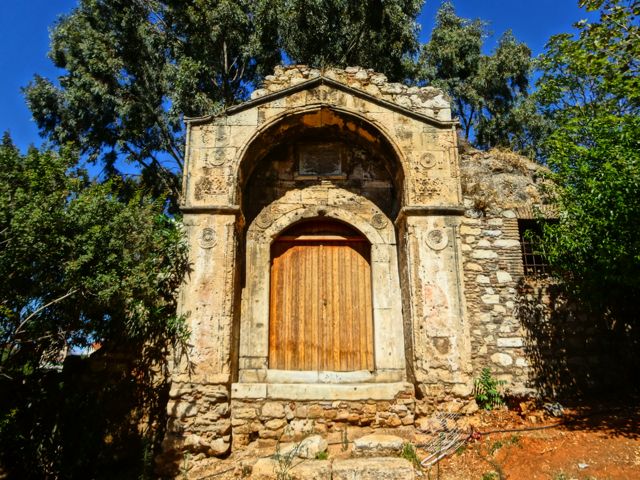 Across from the Tower is the Doorway of the Medrese, originally a theological school founded in 1721 by Mehmet Fahri. During the War of Independence the Turks used it as a prison and hung many Greeks from the platanos tree and after the war the Greeks used it for the same purpose. In the minds of the Athenians
it became
a cursed place.
The poet Achilleas Paraschos in 1843 predicted that one day it would be chopped up and used for firewood. He was right. In 1919 the tree was struck by lightning and the rest was chopped down and used for firewood. The building itself was demolished except for the door. It is not a popular archaeological site and not really well known at all. But it is worth mentioning for the sake of history not ending with the Classical Greeks and the Romans and since there is no sign many people wonder why it is still there. Across from the Tower is the Doorway of the Medrese, originally a theological school founded in 1721 by Mehmet Fahri. During the War of Independence the Turks used it as a prison and hung many Greeks from the platanos tree and after the war the Greeks used it for the same purpose. In the minds of the Athenians
it became
a cursed place.
The poet Achilleas Paraschos in 1843 predicted that one day it would be chopped up and used for firewood. He was right. In 1919 the tree was struck by lightning and the rest was chopped down and used for firewood. The building itself was demolished except for the door. It is not a popular archaeological site and not really well known at all. But it is worth mentioning for the sake of history not ending with the Classical Greeks and the Romans and since there is no sign many people wonder why it is still there.
|
|
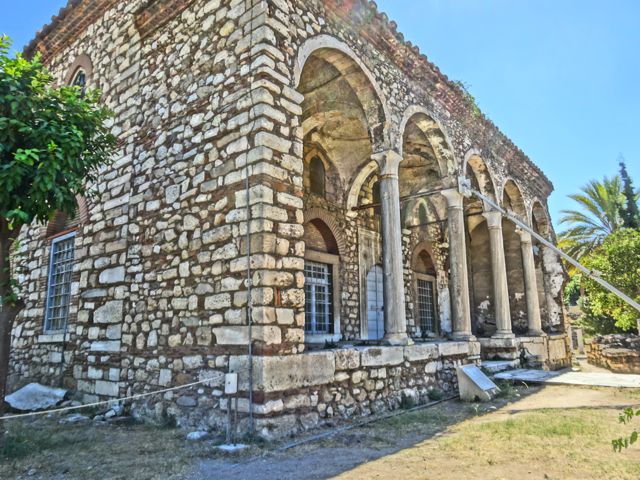 The Mosque on the grounds of the Roman Agora was called the Mosque of Mehmet the Conqueror, built around 1458 for the visit to Athens by Sultan Mehmet a fan of the ancient Greek philosophers. Later the Mosque was known as the Wheat Bazaar Mosque because it was next to the yearly wheat market. It was briefly a Catholic
church during the five months that the Venetians occupied the city. The minaret was demolished after Greece won its independence and the mosque became a school for teachers and then a bakery for the army. Now it is just used for storage by the archaeologists working on the Roman Agora. Generally mosques and hamams(Turkish Bath) are downplayed by the Greek tourism officials and archaeologists, though in the last few years they have restored an old hamam called the Bath of the Winds at 22 Panos Street
in the Plaka, just a few steps from the Tower of the Winds. But it is really just a museum and you can't bathe there. But there is a working hamam at Asomaton Melidoni Street 1 near the Keramikos Archaeological site at the bottom of Ermou where you can actually take a bath like you would in Istanbul. The Mosque on the grounds of the Roman Agora was called the Mosque of Mehmet the Conqueror, built around 1458 for the visit to Athens by Sultan Mehmet a fan of the ancient Greek philosophers. Later the Mosque was known as the Wheat Bazaar Mosque because it was next to the yearly wheat market. It was briefly a Catholic
church during the five months that the Venetians occupied the city. The minaret was demolished after Greece won its independence and the mosque became a school for teachers and then a bakery for the army. Now it is just used for storage by the archaeologists working on the Roman Agora. Generally mosques and hamams(Turkish Bath) are downplayed by the Greek tourism officials and archaeologists, though in the last few years they have restored an old hamam called the Bath of the Winds at 22 Panos Street
in the Plaka, just a few steps from the Tower of the Winds. But it is really just a museum and you can't bathe there. But there is a working hamam at Asomaton Melidoni Street 1 near the Keramikos Archaeological site at the bottom of Ermou where you can actually take a bath like you would in Istanbul.
|
|
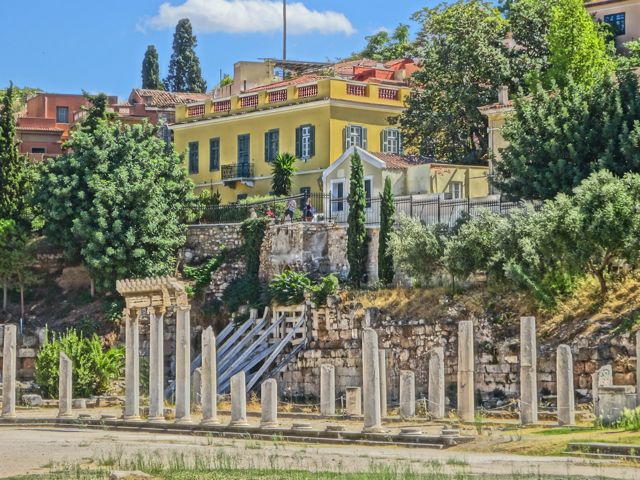 The whole
area around the Roman Agora is surrounded by tavernas, most of them
catering to tourists, but in general they are all
OK. It seems like everywhere you look in the Plaka
there is evidence of some past civilization, being
it Greek, Roman or Ottoman Turkish. In some places
the pavement has been opened to reveal ancient
columns and houses. Some say that in their
zealousness, the archaeologists have sacrificed
many of the beautiful old buildings of the 19th
century to expose the ancient sites and have
spoiled the area. In a way it is true because when
I wander through the Plaka I wish there was more
of it. I wish the whole city of Athens was like
the Plaka. But I guess you can't have everything
and the Plaka is certainly large enough so that it
should take a lot longer then the time a tourist
has to explore, to get bored with
it. The whole
area around the Roman Agora is surrounded by tavernas, most of them
catering to tourists, but in general they are all
OK. It seems like everywhere you look in the Plaka
there is evidence of some past civilization, being
it Greek, Roman or Ottoman Turkish. In some places
the pavement has been opened to reveal ancient
columns and houses. Some say that in their
zealousness, the archaeologists have sacrificed
many of the beautiful old buildings of the 19th
century to expose the ancient sites and have
spoiled the area. In a way it is true because when
I wander through the Plaka I wish there was more
of it. I wish the whole city of Athens was like
the Plaka. But I guess you can't have everything
and the Plaka is certainly large enough so that it
should take a lot longer then the time a tourist
has to explore, to get bored with
it.
|
|
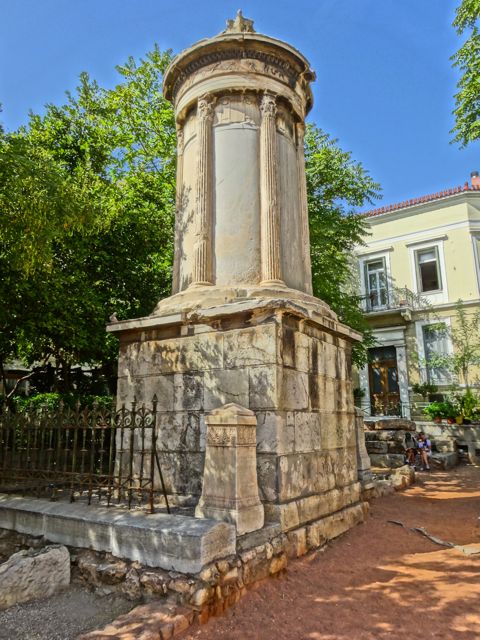 On the Makrianni side of the Plaka is the Monument to Lysikratous built to commemorate a series of plays. It is the last remaining of many which lined what is now Tripodon street. The Jesuits had a house next to it which in 1658 was bought by the Capuchins who then bought the monument and used it as a
chapel. The
Capuchan Monastery
was the closest thing Athens had to a hotel. Chateaubriand stayed there as did Lord Byron, where he wrote part of Childe Harold. Amazingly, Lord Elgin wanted to take the monument apart and reassemble it in England and was only stopped because it belonged to the Capuchans and for that reason the Turkish Viavode (Governor) could not give his permission. You can enter the site, it is free, and walk on the ancient road that used to be Tripodon Street. Across the street from the monument is a cafe that used to
be the famous Dirty Corner, which was a popular hangout for X-pats in the sixties and early seventies and which was immortalized in the book Erotic Stories from the Dirty Corner, which I read and tried to figure out who was who based on their eccentricities since the author had changed the names. Right behind it is the popular restaurant Daphne, which is an upscale gourmet bistro-style Greek restaurant made famous by Hillary Clinton when she visited Athens. Just above the monument is a
cafe that used to be the last Karagiozis Theater. If you take a right on
Tripodon and walk with the acropolis on your left you will see the new Karagiozis school where they still do performances of the traditional puppet theater usually on Friday, Saturday and Sunday nights. On the Makrianni side of the Plaka is the Monument to Lysikratous built to commemorate a series of plays. It is the last remaining of many which lined what is now Tripodon street. The Jesuits had a house next to it which in 1658 was bought by the Capuchins who then bought the monument and used it as a
chapel. The
Capuchan Monastery
was the closest thing Athens had to a hotel. Chateaubriand stayed there as did Lord Byron, where he wrote part of Childe Harold. Amazingly, Lord Elgin wanted to take the monument apart and reassemble it in England and was only stopped because it belonged to the Capuchans and for that reason the Turkish Viavode (Governor) could not give his permission. You can enter the site, it is free, and walk on the ancient road that used to be Tripodon Street. Across the street from the monument is a cafe that used to
be the famous Dirty Corner, which was a popular hangout for X-pats in the sixties and early seventies and which was immortalized in the book Erotic Stories from the Dirty Corner, which I read and tried to figure out who was who based on their eccentricities since the author had changed the names. Right behind it is the popular restaurant Daphne, which is an upscale gourmet bistro-style Greek restaurant made famous by Hillary Clinton when she visited Athens. Just above the monument is a
cafe that used to be the last Karagiozis Theater. If you take a right on
Tripodon and walk with the acropolis on your left you will see the new Karagiozis school where they still do performances of the traditional puppet theater usually on Friday, Saturday and Sunday nights.
|
|
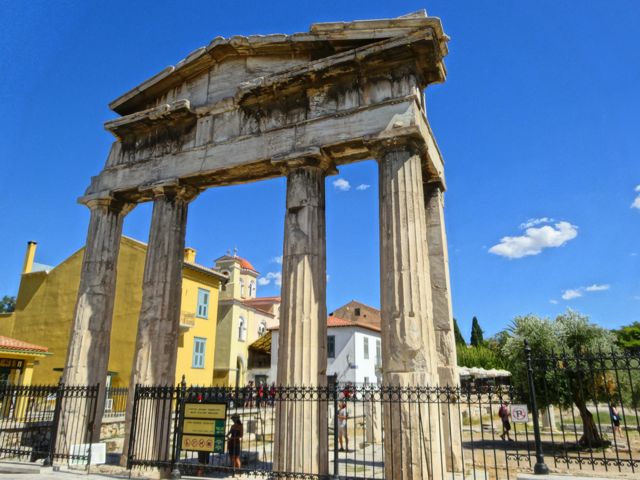 As many monuments and ancient buildings as there are in Athens there is one man who can be blamed for there not being many more. That was Ali Hadji Haseki, the governor of Athens in the late eighteenth century. He taxed the people of Athens until they had nothing and reduced the whole area to poverty. In 1778 he and
the small
circle of rich Athenians, who also prospered off the work of the people, decided to build a wall around the city, supposedly to keep Albanians
out but actually to keep the Athenians in. Some of the city's most ancient landmarks and buildings were demolished to build this wall including the bridge over the Illissos River, the Temple to Demeter and the facade of Hadrian's reservoir on Lykabettos. Finally Sultan Selim III took notice of what was happening in Athens and Haseki was beheaded on the island of Kos, his head taken and exhibited in the Topkapi Palace. The mansion of Ali Haseki is now the School of Agriculture. As many monuments and ancient buildings as there are in Athens there is one man who can be blamed for there not being many more. That was Ali Hadji Haseki, the governor of Athens in the late eighteenth century. He taxed the people of Athens until they had nothing and reduced the whole area to poverty. In 1778 he and
the small
circle of rich Athenians, who also prospered off the work of the people, decided to build a wall around the city, supposedly to keep Albanians
out but actually to keep the Athenians in. Some of the city's most ancient landmarks and buildings were demolished to build this wall including the bridge over the Illissos River, the Temple to Demeter and the facade of Hadrian's reservoir on Lykabettos. Finally Sultan Selim III took notice of what was happening in Athens and Haseki was beheaded on the island of Kos, his head taken and exhibited in the Topkapi Palace. The mansion of Ali Haseki is now the School of Agriculture.
|
|
The Plaka: Final Words
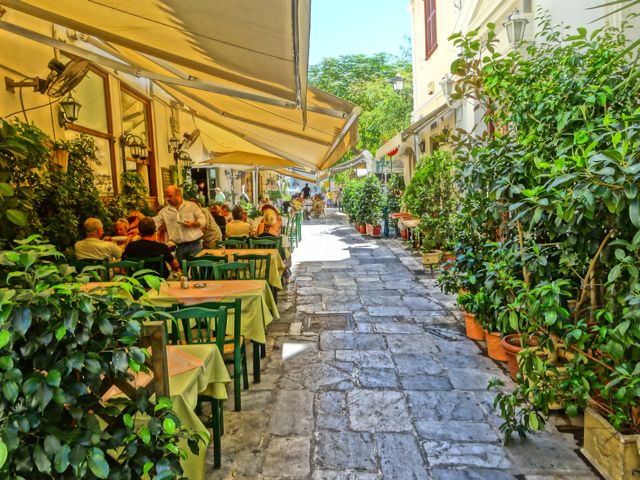 Whether you like hanging out watching people, shopping, eating,
or wandering around, the Plaka is a great area to
be in or near. From it you can walk to all the
desirable parts of central Athens with a minimum
of contact with the aspects of modern civilization
many people find unpleasant: autos, pollution,
noise and crowds. The Plaka is like a small island
in the middle of the city and it was not very long
ago that the Plaka was the city of Athens. If you
have time to kill get off the beaten paths and
walk through the back streets. Admire the
architecture of buildings that have stood for
hundreds of years or climb the hill and see
buildings that have lasted for thousands. It
is for that reason that I suggest finding a hotel
in the Plaka or nearby. If you have a hotel
actually in the Plaka you may never come in
contact with the Athens traffic that so many people complain about.
Whether you like hanging out watching people, shopping, eating,
or wandering around, the Plaka is a great area to
be in or near. From it you can walk to all the
desirable parts of central Athens with a minimum
of contact with the aspects of modern civilization
many people find unpleasant: autos, pollution,
noise and crowds. The Plaka is like a small island
in the middle of the city and it was not very long
ago that the Plaka was the city of Athens. If you
have time to kill get off the beaten paths and
walk through the back streets. Admire the
architecture of buildings that have stood for
hundreds of years or climb the hill and see
buildings that have lasted for thousands. It
is for that reason that I suggest finding a hotel
in the Plaka or nearby. If you have a hotel
actually in the Plaka you may never come in
contact with the Athens traffic that so many people complain about.
|
|
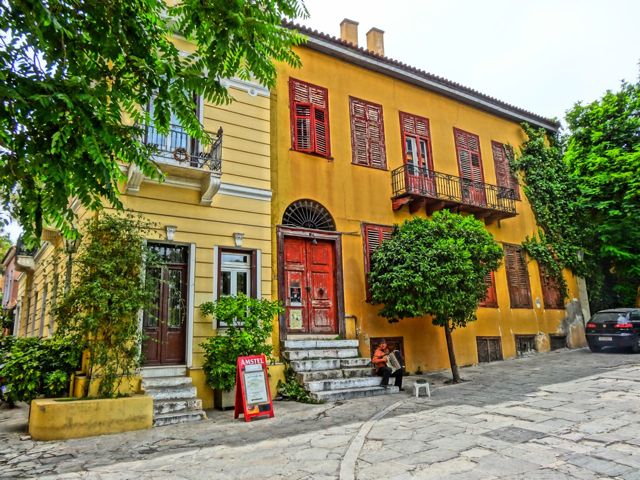 If you are staying in a hotel in nearby
Makrianni or Syntagma or on Athinas Street you may have to cross a
street or two to get here which is no big deal. But if you are down Syngrou or way
up in Ambelokipi you will need to take a hotel
shuttle or a Metro to get to the Plaka and in my
opinion it is much easier to walk out the door of your hotel any time of day and be in the Plaka
then to have to make your way here. Keep this in
mind when you are booking your hotel. If you are
working with a travel agents in the USA or
thinking about going on a package tour, find out
where the hotels offered are located because it
could make a big difference in your appreciation
of the city of Athens. If none of the hotel
choices are near the Plaka then be skeptical and
ask them why. Your best option is to work with
a Greek
Agency in
Athens that knows the city. Tell them you want to
be able to walk to the Plaka if not be in it. The
Plaka is minutes away from the Metro so you can
easily get to Pireaus and to the islands. Most of the hotels in the Plaka are small, family run, and located on pedestrian streets. For
recommended hotels in and around the Plaka
see Hotels or those listed at the bottom of the page. If you are staying in a hotel in nearby
Makrianni or Syntagma or on Athinas Street you may have to cross a
street or two to get here which is no big deal. But if you are down Syngrou or way
up in Ambelokipi you will need to take a hotel
shuttle or a Metro to get to the Plaka and in my
opinion it is much easier to walk out the door of your hotel any time of day and be in the Plaka
then to have to make your way here. Keep this in
mind when you are booking your hotel. If you are
working with a travel agents in the USA or
thinking about going on a package tour, find out
where the hotels offered are located because it
could make a big difference in your appreciation
of the city of Athens. If none of the hotel
choices are near the Plaka then be skeptical and
ask them why. Your best option is to work with
a Greek
Agency in
Athens that knows the city. Tell them you want to
be able to walk to the Plaka if not be in it. The
Plaka is minutes away from the Metro so you can
easily get to Pireaus and to the islands. Most of the hotels in the Plaka are small, family run, and located on pedestrian streets. For
recommended hotels in and around the Plaka
see Hotels or those listed at the bottom of the page.
|
|
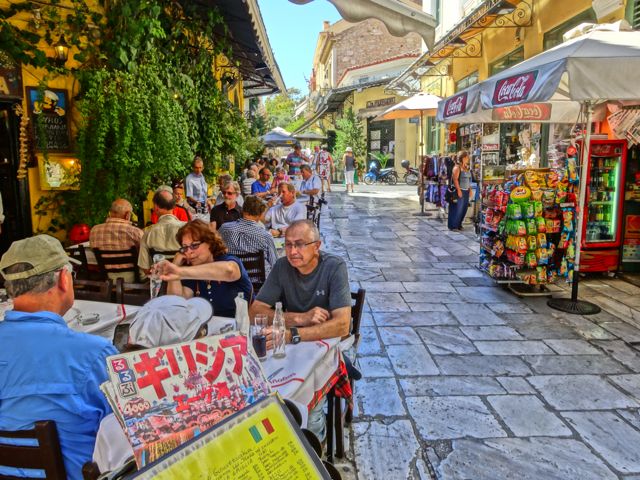 Some people complain that the Plaka is not what
it used to be, that it has been spoiled. You could
say the same thing about Mykonos or Greenwich
Village or Fisherman's Wharf too. Anything
beautiful will be exploited. That is the nature of
life on the planet. The Plaka has certainly
changed. Artists who sold their paintings on the
street now have their own galleries and musicians
who played the small clubs now sell out stadiums in
Greece and overseas. The working-class tavernas
are gone or have become fancy, but there is still
good food to be found. Plaka is no longer bohemian
and that bugs a lot of people. But it is still fun
and it is not only tourists who come here. Greeks
hang out here too. It has changed but it is still
the best place in Athens to go and not feel like
you are in Athens and on a sunny weekend afternoon
or evening much easier to get to than an island.
So use the Plaka as your base and get to know it
while venturing into other pleasant areas like
the National
Gardens and other
green
areas or
as a place of refuge to return to from visits
to Omonia,
the Central
Market, Monastiraki and
some of the wilder parts of Athens. And of course
the Plaka is the best place in Athens to buy that
perfect gift for someone special. Some people complain that the Plaka is not what
it used to be, that it has been spoiled. You could
say the same thing about Mykonos or Greenwich
Village or Fisherman's Wharf too. Anything
beautiful will be exploited. That is the nature of
life on the planet. The Plaka has certainly
changed. Artists who sold their paintings on the
street now have their own galleries and musicians
who played the small clubs now sell out stadiums in
Greece and overseas. The working-class tavernas
are gone or have become fancy, but there is still
good food to be found. Plaka is no longer bohemian
and that bugs a lot of people. But it is still fun
and it is not only tourists who come here. Greeks
hang out here too. It has changed but it is still
the best place in Athens to go and not feel like
you are in Athens and on a sunny weekend afternoon
or evening much easier to get to than an island.
So use the Plaka as your base and get to know it
while venturing into other pleasant areas like
the National
Gardens and other
green
areas or
as a place of refuge to return to from visits
to Omonia,
the Central
Market, Monastiraki and
some of the wilder parts of Athens. And of course
the Plaka is the best place in Athens to buy that
perfect gift for someone special.
|
Hotels in and Around the Plaka
|
|
This is the part of Athens you want to stay in. The reasons are simple. First of all you are within walking distance of every archaeological site including the Acropolis, Temple of Olympian Zeus, The Olympic Stadium, the Ancient and Roman Agoras, as well as almost all the museums you will want to visit. The Plaka and surrounding areas are where the best restaurants are as well as Athens main shopping district. You are a few blocks from Syntagma Square and
Monastiraki Square
and the metro to the port and the airport. It is also the safest area to be in.
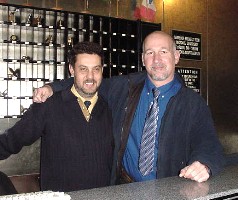 For those looking for a good economy hotel I recommend the 2-star Hotel Attalos which
is just
2 blocks from
Monastiraki Square on the commercial Athinas street. It has a view of the Acropolis from many of its rooms and a great rooftop bar with views of the entire city. If you click on the link you will find the cheapest rates available and if you think that this is the hotel you want to stay at book it now because it does fill up even in the off-season. The Hotel Cecil is a block further but still close enough to be listed with the Plaka Hotels. Other 2-star hotels in and around the Plaka are the small but very tasteful Hotel Adonis which is right in the Plaka on a small pedestrian
street in a location that can't be beat if you want to be in the Plaka and not just near it. But with only 27 rooms and the fact that it is popular with regular travelers to Greece you need to book quickly. It is right across the street from the Acropolis House, one of the few
hotels on the site that you can still get a room with a toilet down the hall(optional of course). Around the block is the family run Hotel Nefeli which is popular with friends of mine who have to spend a couple nights in Athens twice a
year on their way to and from Skiathos and will probably get mad at me when they can't get a room there because I put it on my site. But one must think of the common good, mustn't one? The Hotel Byron, owned by a Greek-American baseball player is
right in the shadow of the Acropolis. The A for Athens is an unclassified hotel which has received high praise from those who have stayed there and is right in Monastiraki Square with great views of the Acropolis and a popular rooftop cafe with a great view.. For those looking for a good economy hotel I recommend the 2-star Hotel Attalos which
is just
2 blocks from
Monastiraki Square on the commercial Athinas street. It has a view of the Acropolis from many of its rooms and a great rooftop bar with views of the entire city. If you click on the link you will find the cheapest rates available and if you think that this is the hotel you want to stay at book it now because it does fill up even in the off-season. The Hotel Cecil is a block further but still close enough to be listed with the Plaka Hotels. Other 2-star hotels in and around the Plaka are the small but very tasteful Hotel Adonis which is right in the Plaka on a small pedestrian
street in a location that can't be beat if you want to be in the Plaka and not just near it. But with only 27 rooms and the fact that it is popular with regular travelers to Greece you need to book quickly. It is right across the street from the Acropolis House, one of the few
hotels on the site that you can still get a room with a toilet down the hall(optional of course). Around the block is the family run Hotel Nefeli which is popular with friends of mine who have to spend a couple nights in Athens twice a
year on their way to and from Skiathos and will probably get mad at me when they can't get a room there because I put it on my site. But one must think of the common good, mustn't one? The Hotel Byron, owned by a Greek-American baseball player is
right in the shadow of the Acropolis. The A for Athens is an unclassified hotel which has received high praise from those who have stayed there and is right in Monastiraki Square with great views of the Acropolis and a popular rooftop cafe with a great view..
If you are a college student, unsuccessful artist, or homeless person whose credit card is not quite maxed out yet and are looking for something even cheaper than 2-star and don't want to be far from the sites check out the Dioskouros Guest
House, the Hotel Tempi, the Athenstyle Hotel/Pension and the Hotel Fivos, all of which are good choices for backpackers because of their location and because they are comparably priced with the cheap hotels in the areas where you DON'T want to be. Remember that if you book a hotel far from the Plaka because
you save a couple euros, and end up taking a taxi home every night, you may as well paid more and walked. Listed among these budget hotels is the Hotel Kimon which probably has the best location, right in the Plaka and features free wifi as do the Tempi and Dioskouros.
For a little more money the Athens Cypria is on a small pedestrian street right off Ermou and the Hotel Central has a rooftop bar with a great view of the Acropolis, as do many of the rooms, and a jacuzzi. The Amazon Hotel, Hotel Plaka and the Hotel Adrian are all right in the Plaka and are 3-star and are all good hotels with the Adrian
having the best location, right on Adrianou, the primary shopping street in the Plaka. The 4-star hotels in the Plaka include the Hotel Electra on pedestrian Ermou Street, the Athens Gate with its views of the Acropolis and the Temple of Olympian Zeus, and the very popular Hotel Hera which is in Makrianni but I list it here because it is such
an easy walk to get to the Plaka. The same can be said for the Herodian Hotel and the Parthenon Hotel. The Magna Grecia Boutique Hotel is housed in a beautiful neoclassical building, designed in 1898 by Ernest Schiller, and enjoys an excellent location, right on Metropolis street near the cathedral. Not to be forgotten are the newly rennovated Hotel Amalia and the new Athens Diamond hoMtel which is sort of a combination hotel/home or else a hotel
for homs which if I am not mistaken means men. It probably does not matter. It is a very nice hotel.
For those who want to go for all-out luxury the super-popular Electra Palace is on a quiet street right smack in the middle of the Plaka within walking or even crawling distance
from all
the tavernas, and has swimming pools, rooftop bar and restaurant, as does the Royal Olympic which is a little further out, maybe a 10 minute walk from the heart of the Plaka but on a busy street (As are Hotel Amalias and Athens Gate). Divani Palace Acropolis offers elegant rooms, just steps from the Acropolis and a 10-minute walk from the Plaka. There are of course the luxury hotels in Syntagma Square but I have listed them in that section instead since
I am assuming that most people who want to stay in the Plaka want to avoid busy streets and the occasional demonstration which are traditionally held in Syntagma. If you stay at any of the above hotels you are unlikely to run into trouble unless you go looking for it. If you need a hotel recommendation you can also e-mail me. You can also book these through the travel agencies on my website which I recommend if you are going to need help with ferries and hotels on the islands. There is more hotel information on my hotels page.
|
|
When in the Plaka visit the Hellenic Society for the Protection of the Environment and the Cultural Heritage at
28 Tripodon Street in the Plaka, just beyond the Lysicratus Statue. The center is not only a museum with a nice little bookstore, but it also
has a restaurant that serves traditional food.
The most impressive thing about it is in the basement where you can see the original ancient Tripodon Street and a 5th Century BC wall. Stop in and buy something or have lunch. It is for a good cause.
|
|