In
Search of Old Athens
|
|
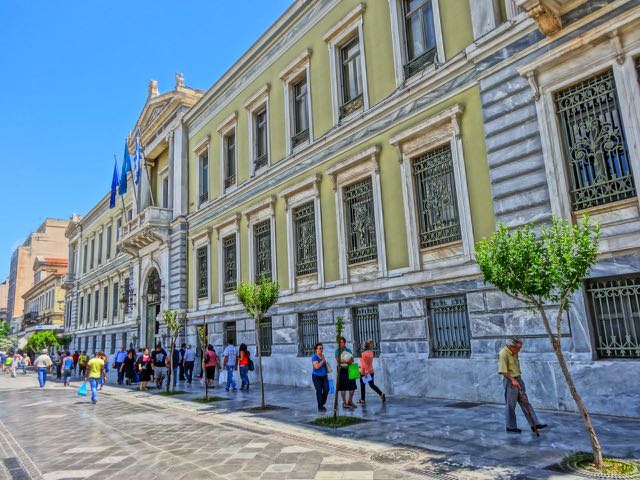 Many
people say that besides the Acropolis and the
major archeological sites, there is little of
architectural substance in the city of Athens. I
completely disagree. Those who explain Athens away as merely
a concrete jungle are guilty of not having their
eyes open when they walk the streets of Greece's capital
city. Actually
there are many distinguished buildings scattered
throughout the city, most built before the 20th century in the neo-classic style. Many of
these have been restored and some of those that
have not are in the process of being
restored. You
could compare it to New York City because many
of the old beautiful buildings and homes were
knocked down in the name of 'progress' (or
greed) and replaced with apartment buildings.
If you can find an old postcard of Athens from
the late 19th century, you can wander around
and find the buildings which are still in
existence. (See Athens:
The Way It Used to Be) Many
people say that besides the Acropolis and the
major archeological sites, there is little of
architectural substance in the city of Athens. I
completely disagree. Those who explain Athens away as merely
a concrete jungle are guilty of not having their
eyes open when they walk the streets of Greece's capital
city. Actually
there are many distinguished buildings scattered
throughout the city, most built before the 20th century in the neo-classic style. Many of
these have been restored and some of those that
have not are in the process of being
restored. You
could compare it to New York City because many
of the old beautiful buildings and homes were
knocked down in the name of 'progress' (or
greed) and replaced with apartment buildings.
If you can find an old postcard of Athens from
the late 19th century, you can wander around
and find the buildings which are still in
existence. (See Athens:
The Way It Used to Be)
|
|
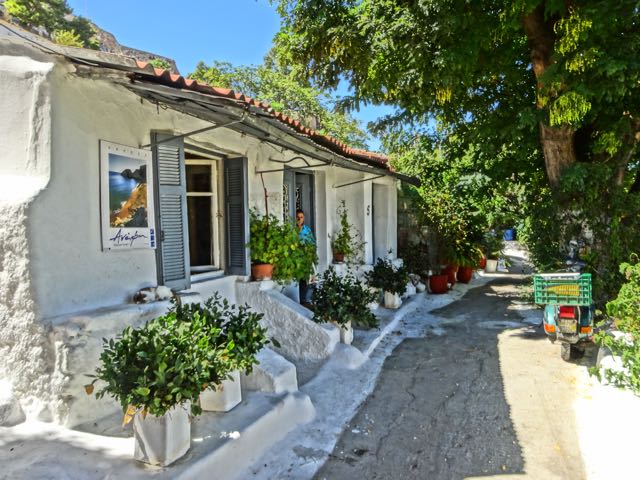 Athens
is no Vienna or Paris in the respect that there
are no large sections of the city that have
remained intact for hundreds of years (except the
Plaka). But Athens is a new city compared to all of
those cities, even more new than New York. Before the late
1800's Athens was basically a village, and that
village still exists in the Plaka and Anafiotika
neighborhoods where you can still walk around and
feel like you are on a small island village rather
then a big city. Even the noise of the traffic
finds it difficult to make its way through the
winding streets and stairways. There are other similar
areas, though not as extensive, at the base of Lykavettos and in
Galatsi though old houses are few and far between, most having been
torn down and replaced with apartment buildings in the sixties and
seventies when Athens was growing at a maddening pace. Even in dense
apartment-filled neighborhoods you can still come across an occasional
house that is a hundred years old or more and looks like something
you might find on an island. Athens
is no Vienna or Paris in the respect that there
are no large sections of the city that have
remained intact for hundreds of years (except the
Plaka). But Athens is a new city compared to all of
those cities, even more new than New York. Before the late
1800's Athens was basically a village, and that
village still exists in the Plaka and Anafiotika
neighborhoods where you can still walk around and
feel like you are on a small island village rather
then a big city. Even the noise of the traffic
finds it difficult to make its way through the
winding streets and stairways. There are other similar
areas, though not as extensive, at the base of Lykavettos and in
Galatsi though old houses are few and far between, most having been
torn down and replaced with apartment buildings in the sixties and
seventies when Athens was growing at a maddening pace. Even in dense
apartment-filled neighborhoods you can still come across an occasional
house that is a hundred years old or more and looks like something
you might find on an island.
|
|
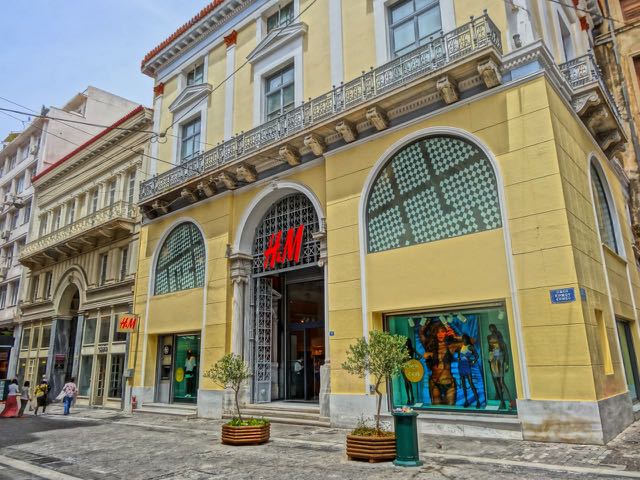 In
Athens it's a matter of taking the time to
distinguish what is distinguishable. Even the most
visually unsightly neighborhood full of
polikatikias (the most hated word in my wife's
vocabulary. It means apartment building), will
have some gem of an old home tucked between
characterless concrete monstrosities. The downtown
area is full of great old buildings and churches.
Nothing compares to the Acropolis of course but
what does anywhere? Right
now there is a process going on which is being
labeled as the Vienafication of
Athens: the pedestrian streets, the
restoration and floodlighting of the old public
buildings, restoration of the main squares and the
sinking of some of the major avenues to create a
giant green archeological area that will spread
from Philippapos Hill to the Stadium and all the way to Patission, maybe as far as Kypseli. There are
even plans to raise the river that used to flow
through the city and is now
underground. In
Athens it's a matter of taking the time to
distinguish what is distinguishable. Even the most
visually unsightly neighborhood full of
polikatikias (the most hated word in my wife's
vocabulary. It means apartment building), will
have some gem of an old home tucked between
characterless concrete monstrosities. The downtown
area is full of great old buildings and churches.
Nothing compares to the Acropolis of course but
what does anywhere? Right
now there is a process going on which is being
labeled as the Vienafication of
Athens: the pedestrian streets, the
restoration and floodlighting of the old public
buildings, restoration of the main squares and the
sinking of some of the major avenues to create a
giant green archeological area that will spread
from Philippapos Hill to the Stadium and all the way to Patission, maybe as far as Kypseli. There are
even plans to raise the river that used to flow
through the city and is now
underground.
|
|
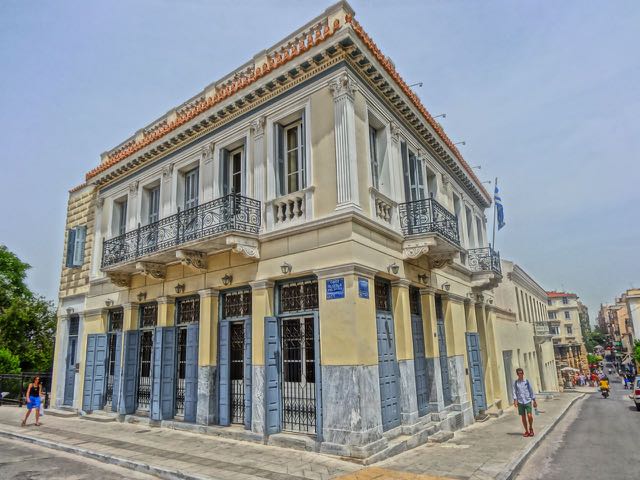 Architecturally
and visually I agree with those who say that parts
of Athens can be a nightmare for someone with
refined architectural tastes, but it is that
juxtaposition of the profound to the profane that
makes Athens interesting. (Did I say that right?)
It's easy to see the ugliness, but you don't
notice it anymore when you are looking for beauty.
You want something interesting to do in Athens? Go
out and keep your eyes open for the old
Neo-Classic buildings and turn-of-the-century
homes. They are everywhere and unless you are
looking for them you may not even notice them.
There are also many examples of Art Deco apartment
buildings, and beautiful examples of Art Nouveau
wrought iron. You
may notice some amazing old buildings from the
early part of the century, locked up but
surrounded by scaffolding so they look like they
are about to be renovated. Unfortunately most of
these are owned by the Greek version of our IRS
or the Church and the scaffolding is only to protect pedestrians
from chunks of stone that might fall from it. You
might ask why they don't sell them and fix them
up, or fix them up and sell them. Apparently there
is no mechanism for this or else there is no
interest. But if I ruled Athens I would auction
them off with the stipulation that if they were
not renovated in 2 years they would be repossessed
and auctioned off again. It's better then having
them just sitting there deteriorating like an old
Pontiac in some redneck's driveway. Architecturally
and visually I agree with those who say that parts
of Athens can be a nightmare for someone with
refined architectural tastes, but it is that
juxtaposition of the profound to the profane that
makes Athens interesting. (Did I say that right?)
It's easy to see the ugliness, but you don't
notice it anymore when you are looking for beauty.
You want something interesting to do in Athens? Go
out and keep your eyes open for the old
Neo-Classic buildings and turn-of-the-century
homes. They are everywhere and unless you are
looking for them you may not even notice them.
There are also many examples of Art Deco apartment
buildings, and beautiful examples of Art Nouveau
wrought iron. You
may notice some amazing old buildings from the
early part of the century, locked up but
surrounded by scaffolding so they look like they
are about to be renovated. Unfortunately most of
these are owned by the Greek version of our IRS
or the Church and the scaffolding is only to protect pedestrians
from chunks of stone that might fall from it. You
might ask why they don't sell them and fix them
up, or fix them up and sell them. Apparently there
is no mechanism for this or else there is no
interest. But if I ruled Athens I would auction
them off with the stipulation that if they were
not renovated in 2 years they would be repossessed
and auctioned off again. It's better then having
them just sitting there deteriorating like an old
Pontiac in some redneck's driveway.
|
|
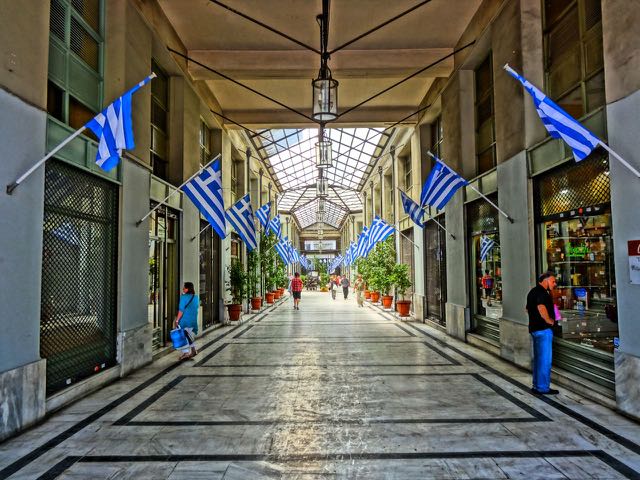 My
sister-in-law is a historic preservation architect
in New York who restored Frank Lloyd Wright's Falling Waters House in
Pennsylvania and she and my wife taught me to appreciate the turn of the century architecture in Athens. Now I see
beautiful buildings everywhere I look. It
definitely adds substance to any walks around the
city. It is also sad because you can imagine what
the city looked like 50 years ago before they
tore many of the old buildings down. Even some of
the early and mid twentieth century buildings can
be amazing like the Printer's Arcade in the Arsakion building that spans an entire block between Panapistimiou
and Stadiou streets. This is one of several impressive arcades in Athens, called stoas in Greek, which used to be among the most prestigious places for shopping. Unfortunately now many of the stores are closed as the commercial areas spread away from the center and towards the suburbs. My
sister-in-law is a historic preservation architect
in New York who restored Frank Lloyd Wright's Falling Waters House in
Pennsylvania and she and my wife taught me to appreciate the turn of the century architecture in Athens. Now I see
beautiful buildings everywhere I look. It
definitely adds substance to any walks around the
city. It is also sad because you can imagine what
the city looked like 50 years ago before they
tore many of the old buildings down. Even some of
the early and mid twentieth century buildings can
be amazing like the Printer's Arcade in the Arsakion building that spans an entire block between Panapistimiou
and Stadiou streets. This is one of several impressive arcades in Athens, called stoas in Greek, which used to be among the most prestigious places for shopping. Unfortunately now many of the stores are closed as the commercial areas spread away from the center and towards the suburbs.
|
|
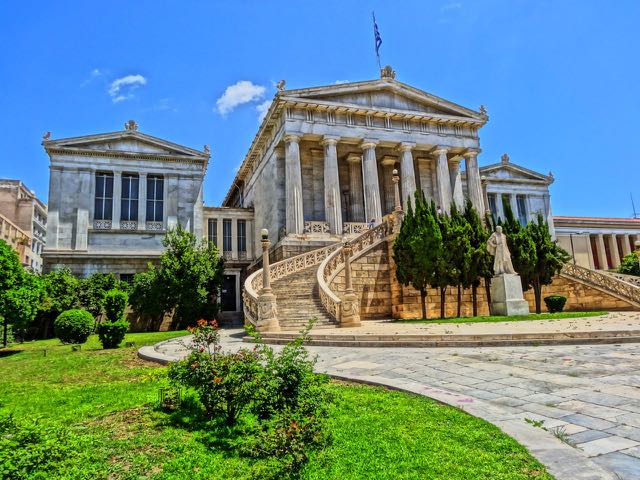 If
you really want to see some beautiful examples of
Hellenic style architecture go take a walk around
the University of Athens. It's like a re-creation of
Classical Athens and you almost expect to see
Socrates, Plato and Aristotle walking around with their students. Who wouldn't
feel proud to go to school in a place that looks like this? Well
actually the buildings behind it are a little more run-down and
graffiti scrawled but like anywhere, the main buildings are impressive. Be sure to visit the library and go inside for a peek.
Also interesting is the Old University, now a museum on
the road that rings the Acropolis where the highest level of Plaka
houses are. Many of the neo-classical buildings of the last two
centuries in Plaka and Psiri have been restored and turned into
museums, galleries or private homes. If
you really want to see some beautiful examples of
Hellenic style architecture go take a walk around
the University of Athens. It's like a re-creation of
Classical Athens and you almost expect to see
Socrates, Plato and Aristotle walking around with their students. Who wouldn't
feel proud to go to school in a place that looks like this? Well
actually the buildings behind it are a little more run-down and
graffiti scrawled but like anywhere, the main buildings are impressive. Be sure to visit the library and go inside for a peek.
Also interesting is the Old University, now a museum on
the road that rings the Acropolis where the highest level of Plaka
houses are. Many of the neo-classical buildings of the last two
centuries in Plaka and Psiri have been restored and turned into
museums, galleries or private homes.
|
|
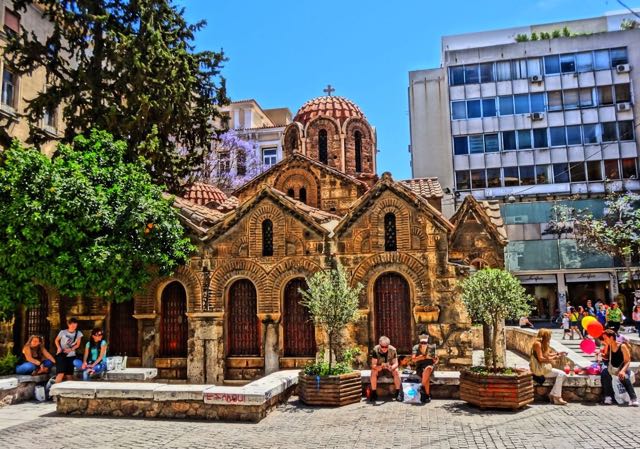 I could do an entire website on the Byzantine churches
which are all over Athens. Some are tucked away in
little courtyards with beautiful gardens, walled
in by five story concrete buildings while others
like the beautiful 11th Century Church of Kapni Karea on Ermou Street,
have once again become the center-piece of a pedestrian walkway, after being
an impediment to Athenian drivers for the last
twenty years because they had to drive around
it. Or the larger churches that were built in the 19th and early 20th centuries such as Agia Irini, one Aeolou Street which used to be the main cathedral of Athens until they built the Metropolis on Metropolis street which is so damaged by the last earthquake it has been covered in scaffolding for the last 20 years, perhaps proving that older is often better. I could do an entire website on the Byzantine churches
which are all over Athens. Some are tucked away in
little courtyards with beautiful gardens, walled
in by five story concrete buildings while others
like the beautiful 11th Century Church of Kapni Karea on Ermou Street,
have once again become the center-piece of a pedestrian walkway, after being
an impediment to Athenian drivers for the last
twenty years because they had to drive around
it. Or the larger churches that were built in the 19th and early 20th centuries such as Agia Irini, one Aeolou Street which used to be the main cathedral of Athens until they built the Metropolis on Metropolis street which is so damaged by the last earthquake it has been covered in scaffolding for the last 20 years, perhaps proving that older is often better.
So
when it comes to architecture and buildings with
personality don't sell Athens short. The concrete jungle you see is merely a facade
that hides numerous treasures. Don't blink. You
might miss one. |
|
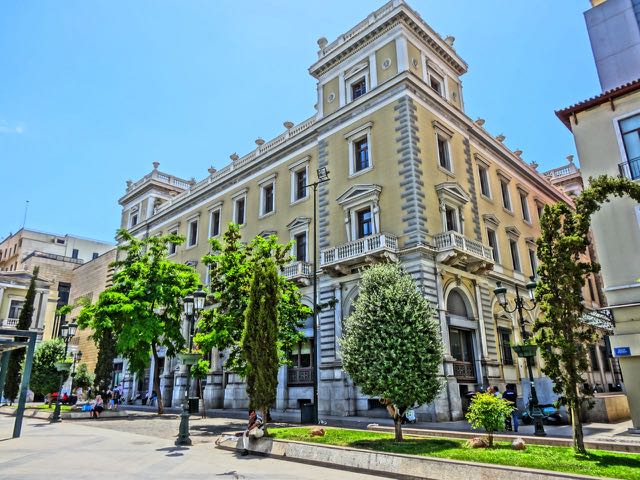
The National Bank of Greece owns many of the most impressive historical buildings
|
|
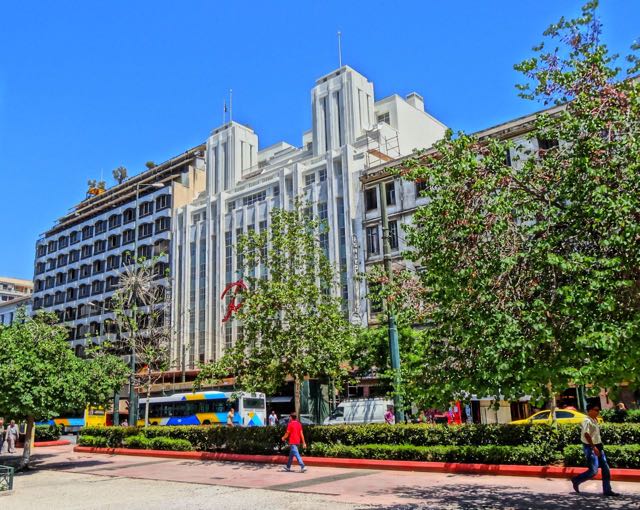
The Art-Deco Rex Theater on Panapistimiou Street
|
|
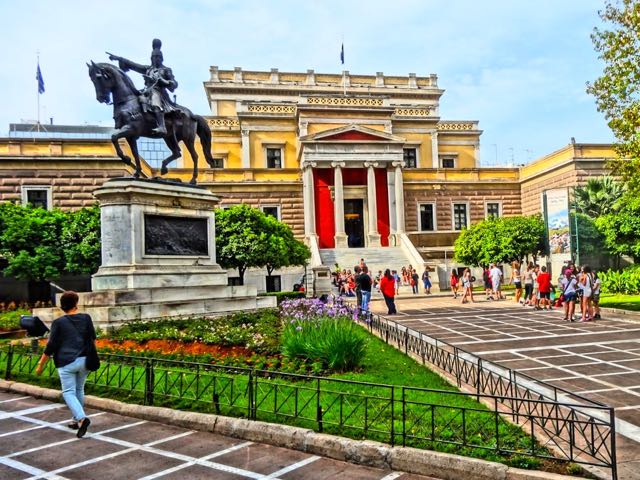
Old Parliament Building on Stadiou Street
|
|
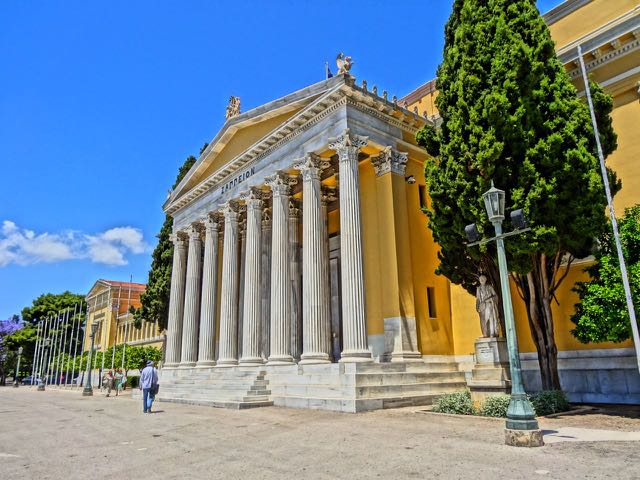
The Zappion Building
|
|
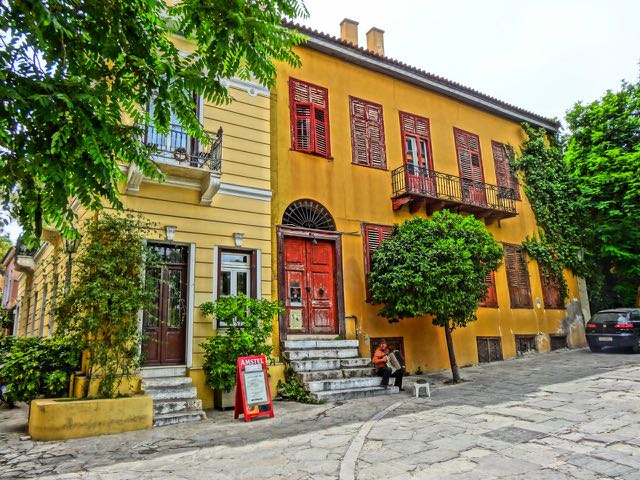
Plaka Houses
|
|

University of Athens Library
|
| See my Photos of Old Kypseli Architecture and Athens:
The Way It Used to Be
|